
Gene-Silencing Study Finds New Targets for Parkinson’s Disease
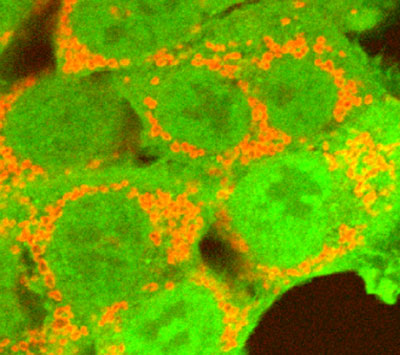
Scientists at the National Institutes of Health have used RNA interference (RNAi) technology to reveal dozens of genes which may represent new therapeutic targets for treating Parkinson’s disease. The findings also may be relevant to several diseases caused by damage to mitochondria, the biological power plants found in cells throughout the body.
“We discovered a network of genes that may regulate the disposal of dysfunctional mitochondria, opening the door to new drug targets for Parkinson’s disease and other disorders,” said Richard Youle, PhD, an investigator at the National Institute of Neurological Disorders and Stroke (NINDS) and a leader of the study. The findings were published online in Nature. Dr Youle collaborated with researchers from the National Center for Advancing Translational Sciences (NCATS).
Mitochondria are tubular structures with rounded ends that use oxygen to convert many chemical fuels into adenosine triphosphate, the main energy source that powers cells. Multiple neurological disorders are linked to genes that help regulate the health of mitochondria, including Parkinson’s, and movement diseases such as Charcot-Marie Tooth Syndrome and the ataxias.
Some cases of Parkinson’s disease have been linked to mutations in the gene that codes for parkin, a protein that normally roams inside cells, and tags damaged mitochondria as waste. The damaged mitochondria are then degraded by cells’ lysosomes, which serve as a biological trash disposal system. Known mutations in parkin prevent tagging, resulting in accumulation of unhealthy mitochondria in the body.
Dr. Youle and his colleagues worked with Scott Martin, PhD, a co-author of the paper and an NCATS researcher who is in charge of NIH’s RNAi facility. The RNAi group used robotics to introduce small interfering RNAs (siRNAs) into human cells to individually turn off nearly 22,000 genes. They then used automated microscopy to examine how silencing each gene affected the ability of parkin to tag mitochondria.
“One of NCATS’ goals is to develop, leverage and improve innovative technologies, such as RNAi screening, which is used in collaborations across NIH to increase our knowledge of gene function in the context of human disease,” said Dr Martin.
For this study, the researchers used RNAi to screen human cells to identify genes that help parkin tag damaged mitochondria. They found that at least four genes, called TOMM7, HSPAI1L, BAG4 and SIAH3, may act as helpers. Turning off some genes, such as TOMM7 and HSPAI1L, inhibited parkin tagging whereas switching off other genes, including BAG4 and SIAH3, enhanced tagging. Previous studies showed that many of the genes encode proteins that are found in mitochondria or help regulate a process called ubiquitination, which controls protein levels in cells.
Next the researchers tested one of the genes in human nerve cells. The researchers used a process called induced pluripotent stem cell technology to create the cells from human skin. Turning off the TOMM7 gene in nerve cells also appeared to inhibit tagging of mitochondria. Further experiments supported the idea that these genes may be new targets for treating neurological disorders.
“These genes work like quality control agents in a variety of cell types, including neurons,” said Dr Youle. “The identification of these helper genes provides the research community with new information that may improve our understanding of Parkinson’s disease and other neurological disorders.”
The RNAi screening data from this study are available in NIH’s public database, PubChem, which any researcher may analyse for additional information about the role of dysfunctional mitochondria in neurological disorders.
“This study shows how the latest high-throughput genetic technologies can rapidly reveal insights into fundamental disease mechanisms,” said Story Landis, PhD, director of the NINDS. “We hope the results will help scientists around the world find new treatments for these devastating disorders.”
Related News
-

News GSK announces £400 million investment in new Cambridge R&D centre
Pharmaceutical giant to establish flagship research facility on Cambridge Biomedical Campus as part of strategic pipeline acceleration
-

News Understanding the Benefits and Advances of Cleanroom Technology
In an industry where precision and sterility are crucial concerns, cleanrooms play a vital role in maintaining the integrity of pharmaceutical products like drugs, vaccines, and other medical products. So, what is a cleanroom?
-

News AbbVie secures GBP£1.2 billion deal for Gilgamesh’s psychedelic programme
AbbVie has penned a significant agreement to acquire the bretisilocin programme from Gilgamesh Pharmaceuticals for up to £1.2 billion, marking a bold step in the pharmaceutical giant's quest to develop treatments for psychiatric disorders. -

News Gates Foundation commits US$2.5 billion to women’s health research
The Bill & Melinda Gates Foundation has announced a substantial US$2.5 billion commitment to accelerate research and development focused exclusively on women's health through 2030.
-

News Mid-year review: notable FDA drug approvals of 2025
As we fly past the halfway point of 2025, the pharmaceutical landscape reliably continues to evolve with innovative therapies addressing critical medical needs. The FDA has already approved 17 groundbreaking medications this year, each representin... -

News US FDA announces new priority vouchers for accelerated review times
The US FDA announced a new priority program for drug developers – the Commissioner’s National Priority Voucher (CNPV) program aims to enhance the health interests of the US by allowing drug developers to redeem a voucher, shortening th... -
News Google-backed start-up raises US$600 million to support AI drug discovery and design
London-based Isomorphic Labs, an AI-driven drug design and development start-up backed by Google’s AI research lab DeepMind, has raised US$600 million in its first external funding round by Thrive Capital. The funding will provide further power t... -

News AstraZeneca to invest US$2.5 billion in Beijing R&D centre
Amid investigations of former AstraZeneca China head Leon Wang in 2024, AstraZeneca have outlined plans to establish its sixth global strategic R&D centre in China. Their aim is to further advance life sciences in China with major research and manufact...