
HemoShear to Collaborate with Pfizer to Help Identify and Predict Drug-Induced Vascular Injury for Early-Stage Compounds

HemoShear has announced a multi-year platform collaboration with Pfizer Inc. Under the terms of the agreement, which will combine the scientific and technical expertise of both companies, HemoShear will leverage its proprietary discovery platform with the aim to develop a predictive model for preclinical drug-induced vascular injury (DIVI). Financial terms of the collaboration were not disclosed.
"The overall goal of the collaboration is to develop robust biological criteria and associated computational tools to reliably identify and predict DIVI in animals and, ultimately, to elucidate potential drug effects in humans," stated Dr Brett Blackman, HemoShear Co-founder and Chief Scientific Officer.
The initial phase of the collaboration is designed to enable HemoShear and Pfizer to recreate the drivers of DIVI biology in the laboratory using HemoShear Translational Tissue Systems, potentially making it possible to interrogate the molecular effects as well as the underlying physiological and DIVI mechanisms.
DIVI poses a safety dilemma for the pharmaceutical industry because there are limitations to resolve the underlying drivers of vascular injury. In addition, there are no generally accepted, specific diagnostic or predictive biomarkers to understand when or why DIVI will occur nor are there models to select the safest compound prior to animal testing. Drugs in development may cause DIVI, such as inflammation or vascular lesions, in animals during testing for drug safety and toxicity. When this occurs, significant programme delays and additional costs are incurred to investigate and explain the underlying biology and determine whether the compound is safe to move forward to human testing, or to determine if another compound would be safer. In some cases, decisions are made to stop the program altogether in the absence of a clear understanding of the injury and whether an animal response translates to human response.
"HemoShear is pleased to take this next exciting step in our relationship with Pfizer," said Vincent Aurentz, Chief Business Officer at HemoShear. "This collaboration demonstrates the need to better understand underlying molecular and biological mechanisms. We are excited to continue on our path to make a major impact on success in drug discovery."
Related News
-
News GSK announces £400 million investment in new Cambridge R&D centre
Pharmaceutical giant to establish flagship research facility on Cambridge Biomedical Campus as part of strategic pipeline acceleration
-
News Understanding the Benefits and Advances of Cleanroom Technology
In an industry where precision and sterility are crucial concerns, cleanrooms play a vital role in maintaining the integrity of pharmaceutical products like drugs, vaccines, and other medical products. So, what is a cleanroom?
-

News AbbVie secures GBP£1.2 billion deal for Gilgamesh’s psychedelic programme
AbbVie has penned a significant agreement to acquire the bretisilocin programme from Gilgamesh Pharmaceuticals for up to £1.2 billion, marking a bold step in the pharmaceutical giant's quest to develop treatments for psychiatric disorders. -

News Gates Foundation commits US$2.5 billion to women’s health research
The Bill & Melinda Gates Foundation has announced a substantial US$2.5 billion commitment to accelerate research and development focused exclusively on women's health through 2030.
-

News Mid-year review: notable FDA drug approvals of 2025
As we fly past the halfway point of 2025, the pharmaceutical landscape reliably continues to evolve with innovative therapies addressing critical medical needs. The FDA has already approved 17 groundbreaking medications this year, each representin... -
News US FDA announces new priority vouchers for accelerated review times
The US FDA announced a new priority program for drug developers – the Commissioner’s National Priority Voucher (CNPV) program aims to enhance the health interests of the US by allowing drug developers to redeem a voucher, shortening th... -
News Google-backed start-up raises US$600 million to support AI drug discovery and design
London-based Isomorphic Labs, an AI-driven drug design and development start-up backed by Google’s AI research lab DeepMind, has raised US$600 million in its first external funding round by Thrive Capital. The funding will provide further power t... -
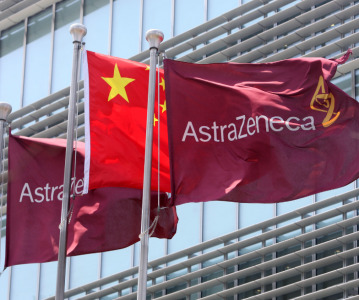
News AstraZeneca to invest US$2.5 billion in Beijing R&D centre
Amid investigations of former AstraZeneca China head Leon Wang in 2024, AstraZeneca have outlined plans to establish its sixth global strategic R&D centre in China. Their aim is to further advance life sciences in China with major research and manufact...