
How healthcare trends inform dosage forms
.png)
Capsules encompass one of the most popular solid oral dosage forms for pharmaceutical products, with the global empty capsule market predicted to rise to USD $3.7 billion by 2026. The growth in the capsule market can be partly attributed to the many options available for drugmakers regarding capsule material, sizes, colours, and printing options. With so many options available, formulators are spoilt for choice. However, selecting the correct capsule for specific product development can lead to challenges around drug complexity and stability.
Speakers Simon Roberts PhD – Scientific Business Development Manager Europe and Dr. Jnanadeva Bhat PhD Head – Formulation R&D (Pharma & Nutra) of ACG World shared some insight into current formulation trends, the benefits and challenges of capsule formulations, and key considerations when selecting the right capsule option for a product.
Pharmaceutical and Nutraceutical Global Trends Inform Dosage Forms
Roberts began the webinar with how current pharmaceutical and nutraceutical trends have been informing oral dosage forms, with patient/customer centricity, R&D innovations, and additive and continuous manufacturing making some of the greatest impacts. Given these trends, some of the major focus areas for the industry include ease of manufacturing, modified release, global regulatory requirements, and specialised applications. Armed with a solid history of capsule evolution and what the pharma industry is looking for in capsule formulations, Roberts presented the advantages of capsules as a dosage form, citing easy encapsulation, quicker development of a new product, and less additives than traditional tablets, among others. In comparison to other solid dosage forms, capsules also require less steps in the manufacturing process than tablets and can achieve a combination fill. Roberts emphasised the ease of development and scalability of capsules given their versatility in holding almost any pharmaceutical or nutraceutical active ingredient. Powders can be blended, and tastes and odours masked with additional ingredients, offering drugmakers a versatile drug formulation option and patients a product that best suits their individual needs.
Reiterating how global consumer healthcare trends regarding patient-centricity and manufacturing innovations are informing the capsule market, Roberts highlights the forecasted growth of the capsule market to reach USD $3.7 billion by 2026, with a 7.2% CAGR during the forecast period from 2021 to 2026. Given all that hard capsules have to offer and their predicted demand, what then are the criteria for selecting the right capsule for your drug formulation?
The Right Capsule for the Right Product
Bhat gave a comprehensive overview of criteria to consider when selecting the appropriate capsule for a product:
1. Shell barrier to gas and water: moisture sensitivity of the drug’s formulation to both environmental humidity and humidity inside the formulation itself will affect the type of capsule used for a particular formulation. The Oxygen Transmission Rate (OTR) and Water Vapour Transmission Rate (WVTR)
2. Reactivity of material filled: excipients will inevitably be utilised along with the API or ANI to improve the mode of administration, solubility, or even the density of the active ingredient. However, capsules may present incompatibility issues when considering their use for a particular drug formulation. Capsule fillings are generally unfavourable for use with reactive aldehydes due to cross-linking. In a similar vein, drug formulations which use anionic and/or cationic polymeric excipients will determine the type of animal gelatine capsule used because of different reactivity between the materials.
3. Material composition and other parameters: Bhat also focused on the physical composition of the capsule itself. For some capsules, the material composition may be hygroscopic while others could cause a Maillard reaction upon contact with primary amides. Physical reactions will generate their own set of challenges that determine the type of capsule used.
Encapsulating pharmaceutical and nutraceutical capsule challenges
Bhat also gave a quick overview of various challenges faced by the pharma industry in regard to capsule formulations. Physio-chemical interactions, cracking of capsules, discoloration, colour interaction, and shell-fill were all cited as specific challenges for capsule manufacturing. Bhat presented several case studies related to these challenges.
For example, dosage forms for the antifungal drug Itraconazole were developed and marketed as gelatin capsules but faced difficulties regarding dissolution. Hydroxypropyl methylcellulose (HPMC) capsules were tested and demonstrated that drug release was higher in comparison to gelatin capsules, and pellets did not remain entrapped in the capsules during dissolution.
Bhat emphasised how such challenges in meeting global healthcare trends with capsule technology could provide ample opportunity for innovation in capsule formulation and modifications, as well as manufacturing practices and procedures.
The nutraceutical industry is not immune to such challenges either, as Roberts presented on challenges faced by the nutraceutical industry. In a similar vein to the pharma industry, common challenges for inserting nutraceutical ingredients into capsules include formulation compatibility, moisture sensitivity, product stability, and animal origin products, among others. Again, case studies were presented to demonstrate how capsule modifications could meet the specific requirements (such as opting for non-animal origin capsules) for nutraceutical products. With healthcare trends looking towards meeting customer choices and lifestyles, capsule development and manufacturing has steadily been moving toward vegetarian or vegan capsule options. Consumer taste and product appeal, Roberts stated, have also informed the continuous development of nutraceutical and supplement capsule technologies to accommodate for stomach sensitivities, olfactory responses, and other sensitivities.
Capsule Questions: what’s left for capsule technology?
Some of the big questions remaining for the Roberts and Bhat concerned regulations around innovative capsule technology for patient centricity. While Roberts stated there could be some challenges regarding colour additives, however many capsule criteria are already regulated and accepted worldwide. With the market growth for solid dosage forms and in particular capsules increasing at the rate that it is, Roberts and Bhat both emphasised how capsule development and manufacturing must account for consumer healthcare interest and trends.
Watch the full webinar on-demand here.
The insight you need at CPHI Barcelona
Making the right decisions – from long-term strategy to manufacturing detail – is critical to the success of your business. Informing those decisions is what we do at CPHI Barcelona. Meet and hear from industry experts who know exactly what you're dealing with.
Your CPHI Barcelona pass gives you access to all conference sessions, including Formulating the Future, as well as the chance to connect in-person with the global pharma supply chain from 24-26 October, at Fira Barcelona Gran Via. Browse the agenda and secure your pass today!
Related News
-

News Swiss pharma industry warns US tariffs could harm global patient care
The Swiss pharmaceutical sector has raised alarms over new US tariffs on medicines, warning of disrupted supply chains, increased costs, and delayed innovation, all of which could jeopardise patient access to essential treatments worldwide.
-

News Women in Pharma: CPHI India – India’s Pharmaceutical Industry and Gender Inclusion Challenges
India’s pharmaceutical industry has emerged as a significant player in the global market, valued at USD 50 billion in FY 2023-2024, according to Frost & Sullivan’s analysis. This sector encompasses a diverse portfolio, including drugs, vacc... -

News Biogen acquires Apellis Pharmaceuticals to boost immunology and rare disease profile
Biogen Inc. has announced its acquisition of Apellis Pharmaceuticals, Inc., a move that is set to significantly enhance its growth portfolio in immunology and rare diseases. The agreement, valued at approximately US$5.6 billion, will see Biogen purchas... -

News Gilead Sciences acquires Ouro Medicines for over US$2 billion
Gilead Sciences confirms a deal to take over Ouro Medicines, adding to a portfolio of therapies for autoimmune diseases.
-
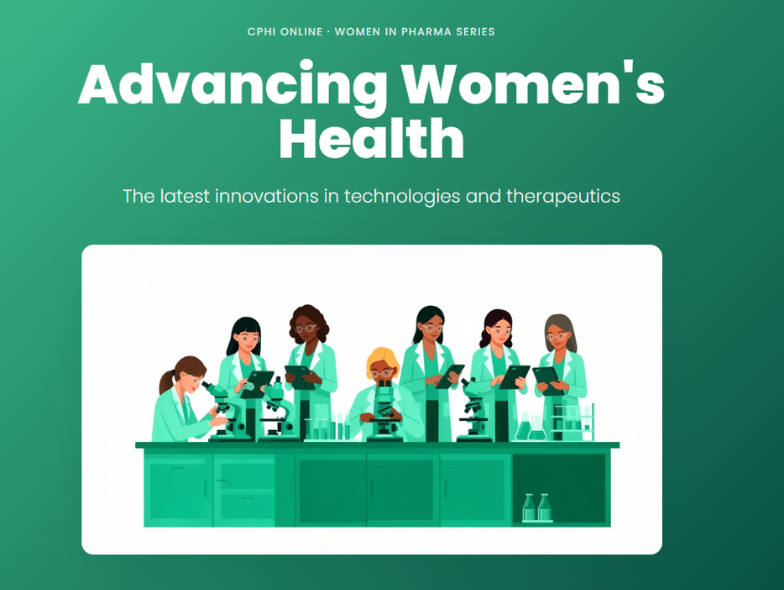
News Women in Pharma: Advancing Women's Health
Discover the latest innovations in technologies and therapeutics that are revolutionising women's health in our latest CPHI Online Women in Pharma infographic.
-

News CPHI Pharma Awards 2026: Recognising Excellence in an Evolving Industry
Submissions now open — deadline May 16
-
News Dr Reddy's to launch generic semaglutide in India
Dr Reddy’s Laboratories, one of India’s leading pharmaceutical companies, is preparing to launch a generic version of semaglutide, branded as Obeda, in March. Obeda is expected to provide a more affordable alternative to Ozempic a... -
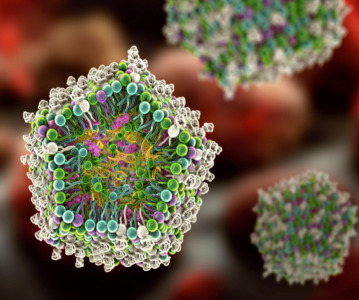
News Frontier Biotech and GSK Forge RNA Therapy Partnership
Frontier Biotechnologies and GSK have entered a global licensing agreement to advance small interfering RNA (siRNA) therapeutics. This collaboration grants GSK exclusive rights to develop and commercialise two promising siRNA candidates, marking a mile...