
Industrial-scale manufacture of therapeutic exosomes
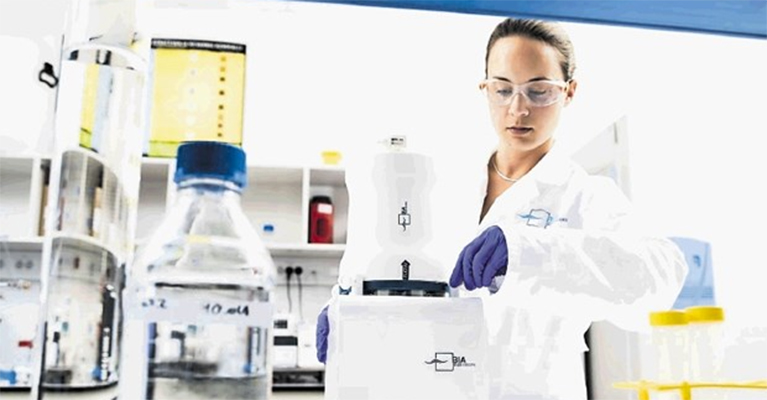
Coordinated purification process development service accelerates progress to clinical trials, and scale-up manufacturing.
BIA Separations has introduced its CORNERSTONE Exosome Process Development Solution, designed to help drug-developers overcome critical development bottlenecks in the preparation of exosomes for clinical use.
Introducing two proprietary new technologies central to highly pure and scalable purification, BIA Separations’ Exosome Process Development Solution represents the latest extension of its CORNERSTONE programs for the manufacture of gene therapy vectors, following the launch of its AAV program earlier this month.
Exosomes fulfil a critical role as communicators among cells, with targeting and message content depending on their surface receptors and payload. Their unique ability to deliver that payload to the right target makes them obvious candidates for an extensive range of therapeutic applications in the fields of cancer and regenerative medicine, including for neurodegenerative and cardio-pulmonary disorders.
For such clinical applications to be realised, thoroughly purified exosomes are required, with key contaminant classes such as host-cell proteins, host-cell DNA, and non-exosomal vesicles reduced to trace levels. BIA Separations’ new technology brings important new tools for this purification, whilst ensuring fast and efficient process development. The technology is easily scalable from lab to manufacturing, and is able to provide better product quality than traditional purification systems.
CORNERSTONE Exosome Development Solution is built on the capabilities of two novel technologies. Kryptonase is an integrated enzymatic treatment that reduces host-cell DNA and facilitates the removal of host-cell protein contaminants. The CIMmultus EV monolithic column is a chromatography device that eliminates non-exosomal vesicles, and concentrates exosomes in a low shear environment. The technologies are available as part of a comprehensive Process Development Service, in which BIA Separations’ experts design and optimize processes to support clinical trials and scale-up to industrial manufacturing. Translational scientists and process developers can also access both new products as a Process Development Pack for exosome research purposes.
Aleš Štrancar, CEO at BIA Separations, said: “Exosomes represent the next generation delivery strategy for nucleic acids and other therapeutics, as well as being evaluated as a platform for regenerative medicine with high hopes of bringing more therapeutic options to chronically ill patients. We are all looking forward to seeing the impact of our tools on this novel therapy space.”
Pete Gagnon, Chief Scientific Officer at BIA Separations, added: “Every new product class presents a unique new set of challenges and exosomes are no exception. Our new CORNERSTONE program embodies the decades of experience we’ve developed with the purification of viruses, DNA plasmids, mRNA, and other gene therapy products, and extends it to include exosomes. This gives our customers a head-start that will help them be first to the clinic and first to market.”
Related News
-
News Novartis signs US$3.2 bn subcutaneous delivery deal with Alteogen
Swiss pharma giant secures access to Korean biotech's ALT-B4 hyaluronidase platform in milestone-heavy agreement, marking Alteogen's fourth major licensing deal of 2026 as competition intensifies in the subcutaneous drug delivery space.
-

News Women in Pharma: The philosophy of pharmaceutical leadership
In this latest instalment of our Women in Pharma series, we sit down with Clarissa Sowemimo-Coker, Chief Strategy Officer at Ambrose Healthcare and CPHI Middle East Advisory Board Member.
-
News The PSCI Supplier Partnership - Collaboration for Responsible Supply Chains
About the Pharmaceutical Supply Chain Initiative The Pharmaceutical Supply Chain Initiative (PSCI) is the leading, member-led association for pharmaceutical companies working collaboratively to build responsible supply chains. Founded in 2006 and es... -
News AstraZeneca shares plunge 8.9% after reports of BMS talks
Britain's largest drugmaker lost more than GBP£17 billion in market value following reports of preliminary merger discussions with Bristol Myers Squibb that could create a pharmaceutical giant worth nearly US$400 billion, though investors rem... -
News GSK announces £400 million investment in new Cambridge R&D centre
Pharmaceutical giant to establish flagship research facility on Cambridge Biomedical Campus as part of strategic pipeline acceleration
-

News The CPHI Sustainability Summit - Where Conversation Becomes Collaboration
The Report Was Never the Destination - “The future of pharmaceutical sustainability won’t be shaped by individual organisations working in isolation. It will be shaped by partnerships, shared expertise and the willingness to work diffe... -

News Trump's generic drug tariffs set to reshape global pharmaceutical supply chains
The US president has announced plans to impose tariffs of up to 200% on imported generic medicines from August 2028, giving manufacturers a two-year window to establish domestic production facilities. The move threatens to upend a global supply chain t... -
News Building Safer, More Responsible Pharmaceutical Supply Chains: PSCI Global Audit Insights
The Pharmaceutical Supply Chain Initiative (PSCI) has released its seventh annual Audit Findings Analysis Report, offering unprecedented insights into supplier practices across the global pharmaceutical and healthcare industry.With a record-breaking 24...