
Intensification and Consistency: Driving Biomanufacturing Innovation
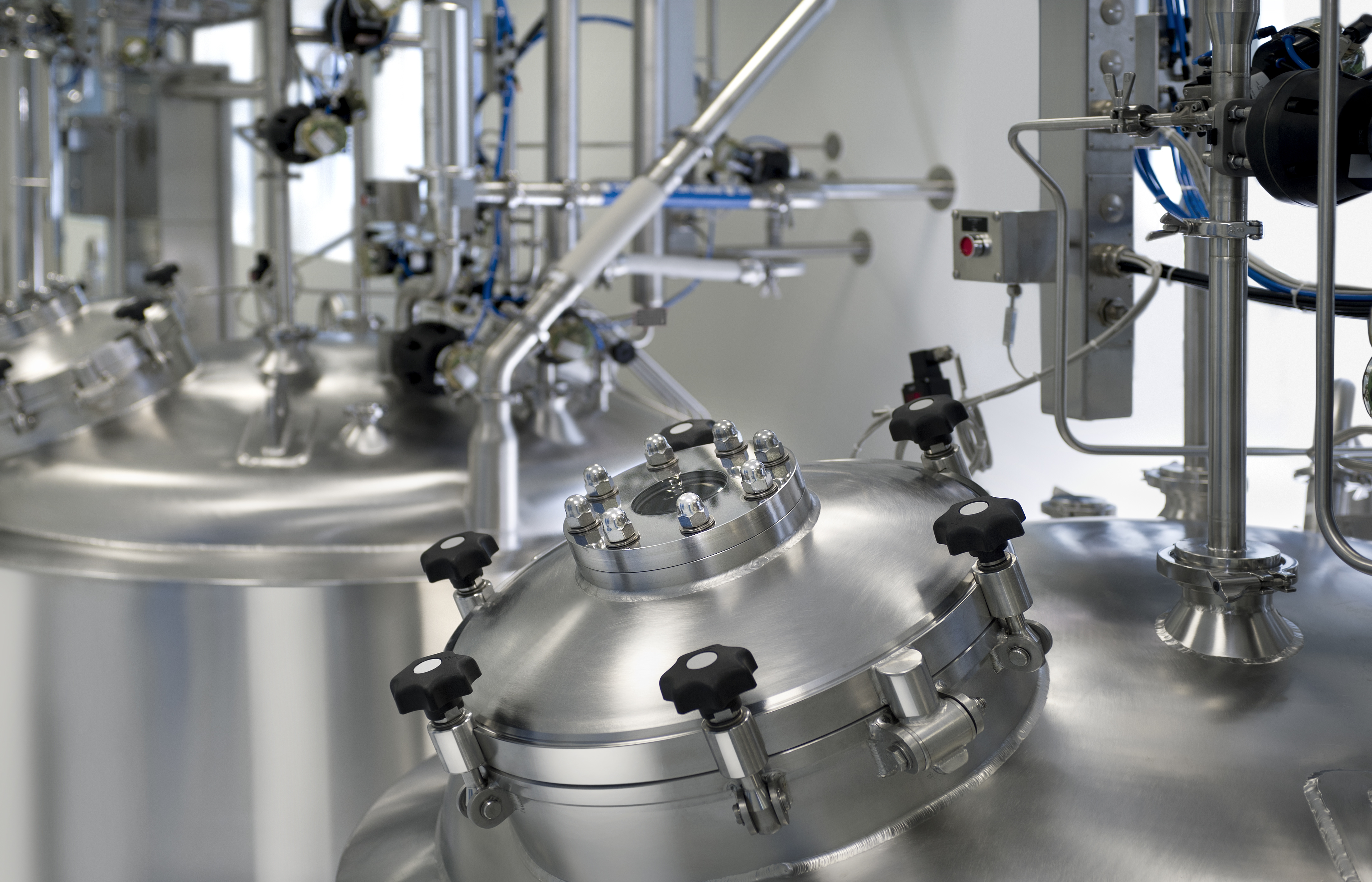
Biopharma’s desire for fast, cheap production and cell and gene therapy firms’ need for consistency is shaping tech development in the sector.
To a great extent, biomanufacturers use processes and tech developed in the 80s. The methods used to make Lilly’s Humulin which was licensed in 1982 [1] are not very different from those used for AbbVie’s Humira, which was launched 20 years later [2].
In recent years, things have started to change and Biopharma has started to look at ways of improving decades-old production methods. A key driver of this, according to Tom Ransohoff from BDO is intensification - the desire to make products faster for less money.
“Every program is different and has different challenges. Having said that, improving speed of development, reducing capital costs and up-front investments in manufacturing and improving flexibility and volumetric productivity are three common areas where I hear needs from clients and colleagues.”
Towards Continuous Manufacturing
Regulators have also noted the drive to make more for less. A Center for Drug Evaluation and Research (CDER) spokesman told us some biopharma's use intensification strategies employed in small molecule pharma.
“There is a trend across the pharmaceutical sector toward process intensification and continuous manufacturing to produce small-molecule drugs and biotechnology products.
“CDER currently sees continuous manufacturing deployed for marketed small molecule, immediate-release innovator drug products. In the future we will see continuous manufacturing deployed for APIs, diverse dosage forms, localized manufacturing, generic drugs, and bioprocesses,” he said.
Dawn Ecker from BDO agrees that continuous manufacturing is gaining traction in biopharma, but warns industry-wide adoption will take time.
“I certainly think biopharma has a significant interest in continuous manufacturing and some of the large biopharma players have taken an interest in advancing this type of manufacturing. However, I don’t think that the majority of the companies in the biopharma space have begun to adopt or create the infrastructure needed to employ continuous manufacturing for recombinant products.”
Her colleague, Tom Ransohoff, shares this view. Yet, he says industry experience with continuous processes like perfusion is an encouraging sign.
“At the moment, most of the work in this area is still at the bench or pilot scale, but we are now seeing examples of adoption for manufacture of clinical supplies for biopharma products, and we believe that the use of these technologies will be expanded significantly in our industry over the coming years.”
Technology Innovation
Biopharma intensification will also involve technology development according to the CDER spokesman.
“For biotechnology products, advancing the manufacturing technology behind upstream and downstream processes has the potential to reduce product shortages and variability.”
New technologies also “allow for production flexibility, simplify scale-up procedures, improve product quality, reduce facility footprints, increase productivity, and reduce production costs,” the spokesman said.
Single-use technologies are an obvious example. Initially, these systems were used in clinical development with traditional stainless steel technologies being used for commercial production. In recent years this has started to change with single-use systems connected in series being used for large scale manufacturing [3].
Use of process analytical technology is also increasing as biopharmaceutical companies recognise the benefits of being able to monitor culture conditions in real-time.
Downstream, biopharmaceutical industry efforts to find alternatives to chromatographic methods are accelerating [4]. Methods such as counter-current multi-stage aqueous two-phase extraction, precipitation and crystallization show the most promise, particularly because they can be operated in continuous mode [5].
Modernization
To that end, the Agency has pledged to help firms adopt more modern production systems.
Five years ago the CDER set up its Emerging Technology Team (ETT) to aid the development of novel technologies – including approaches such as continuous manufacturing.
The spokesman told us, “Since the Emerging Technology Program started in late 2014, it has met with over 15 companies concerning continuous manufacturing for small and large molecules discussing control strategy, facility and process validation, bridging batch to continuous manufacturing, and batch and lot definition.
Downstream Driving Innovation
Dawn Ecker also expects downstream technologies to be the major focus of innovation.
She told us that while titres – the amount of protein expressed by a cell in culture – have increased due to advances in bioreactor design and cell line development, downstream separation technologies have not improved to the same extent.
“Over the last decade, the industry has embraced the mAb platform for manufacturing, [upstream] titres have steadily increased over the last several years. I think for the industry to realize the advances the industry has made thus far, innovation in the downstream processing technology is a bit behind the upstream advances. “I believe at this time, there still exists a bottleneck in downstream processing, so any continued improvement in downstream would help make the overall manufacturing process more efficient,” she said.
Next-Gen Medicine: Cell and Gene Therapies
Growth of the cell and gene therapy sector has attracted a lot of attention in recent years.
Kymriah (tisagenlecleucel) [6], Luxturna (voretigene neparvovec-rzyl) [7] and Zolgensma (onasemnogene abeparvovec-xioi) [8] are good examples. Each garnered headlines after FDA approval, with most articles focused on the products’ hefty price tags.
However, from a manufacturing standpoint, the sector is still in its infancy. Scale-up and high production costs are the biggest challenges says the US FDA Center for Biologics Evaluation and Research (CBER).
A spokesman told us, “We still have much to learn about how these products work, how to administer them safely, and whether they will continue to work properly in the body without causing adverse side effects over long periods of time.
“In contrast to traditional drug development, some of the more challenging questions for cell and gene therapies relate to manufacturing a product that can consistently meet established attributes for safety, strength and quality.”
He added that the CBER is looking at steps that can foster innovation and introduce advances in manufacturing without compromising product safety and quality.
“Current challenges include unprecedented complexities associated with manufacturing these products in a safe, reliable, and cost-effective manner,” he said.
The spokesman cited material variability, product stability and difficulties establishing critical quality attributes and process parameters as hurdles faced by developers.
Filling the Viral Vector Void
Another challenge facing cell and gene therapy developers is a shortage of vectors. A viral vector is an empty virus that developers can fill with genetic material. When these vectors ‘infect’ cells they introduce the material. Developers use vectors to insert genes into cells. Unfortunately, vectors are in short supply. This is in part because production – which uses adherent cells and specialist non-stirred tank bioreactors – takes a long time, furthermore, very few CDMOs have sufficient manufacturing capacity.
The shortage is a problem. Last January the Alliance of Advanced BioMedical Engineering wrote about “growing concern about the global supply of viral vectors” [9]. The industry group suggested that the lack of viral vectors could hold back manufacturers’ clinical development efforts.
Tom Ransoff from BDO also sees the shortage of viral vectors as an issue for cell and gene therapy developers.“The availability of viral vector production capacity is certainly limited at the moment, which is causing many developers of these types of products to re-assess their manufacturing strategies.”
The CBER is also concerned. A spokesman told us, “FDA’s observation is consistent with the general view that there is a limited capacity for viral vector production which may be affecting gene therapy research and development (R&D) programs in both academia and industry.
“Specific impact on R&D programs may vary, depending upon the stage of clinical development and the level of experience in the gene therapy field.”
However, Ransoff is confident the situation will improve. “Over time, in my experience, the market will address this, but it will take time for the imbalance to be corrected. If history is our guide, we will probably “overshoot” as an industry so that excess capacity may be expected in this area in 5-10 years.”
Keep pace with developments in biomanufacturing innnovation
Each year the CPHI brand unites more than 100,000 pharmaceutical professionals through exhibitions, conferences and online communities. If you're looking to meet the leading manufacturers and developers of gene therapies, learn the latest developments through quality conferences and access unparalleled networking opportunities we offer a portfolio of global exhibitions in all major pharma markets throughout the year - take a look at our event calendar for more information.
References
[1] https://americanhistory.si.edu/collections/search/object/nmah_1000967
[2] https://www.accessdata.fda.gov/drugsatfda_docs/label/2018/125057s410lbl.pdf
[3] https://www.sciencedirect.com/science/article/abs/pii/S0167779912001692
[4] https://web.mit.edu/braatzgroup/Hong_ComChemEng_2018.pdf
[5] https://onlinelibrary.wiley.com/doi/abs/10.1002/bit.25695
[6] https://www.reuters.com/article/us-novartis-kymriah-japan/novartis-gets-approval-to-sell-kymriah-in-japan-for-306000-idUSKCN1SL057
[7] https://www.reuters.com/article/us-spark-icer/sparks-price-for-luxturna-blindness-gene-therapy-too-high-icer-idUSKBN1F1298
[8] https://www.cnbc.com/2019/05/24/fda-approves-novartis-2-million-spinal-muscular-atrophy-gene-therapy.html
[9] https://aabme.asme.org/posts/virus-shortage-for-cell-therapies-creates-engineering-opportunity
Related News
-

News Swiss pharma industry warns US tariffs could harm global patient care
The Swiss pharmaceutical sector has raised alarms over new US tariffs on medicines, warning of disrupted supply chains, increased costs, and delayed innovation, all of which could jeopardise patient access to essential treatments worldwide.
-

News Women in Pharma: CPHI India – India’s Pharmaceutical Industry and Gender Inclusion Challenges
India’s pharmaceutical industry has emerged as a significant player in the global market, valued at USD 50 billion in FY 2023-2024, according to Frost & Sullivan’s analysis. This sector encompasses a diverse portfolio, including drugs, vacc... -
News Biogen acquires Apellis Pharmaceuticals to boost immunology and rare disease profile
Biogen Inc. has announced its acquisition of Apellis Pharmaceuticals, Inc., a move that is set to significantly enhance its growth portfolio in immunology and rare diseases. The agreement, valued at approximately US$5.6 billion, will see Biogen purchas... -

News Gilead Sciences acquires Ouro Medicines for over US$2 billion
Gilead Sciences confirms a deal to take over Ouro Medicines, adding to a portfolio of therapies for autoimmune diseases.
-
News Women in Pharma: Advancing Women's Health
Discover the latest innovations in technologies and therapeutics that are revolutionising women's health in our latest CPHI Online Women in Pharma infographic.
-

News CPHI Pharma Awards 2026: Recognising Excellence in an Evolving Industry
Submissions now open — deadline May 16
-
News Dr Reddy's to launch generic semaglutide in India
Dr Reddy’s Laboratories, one of India’s leading pharmaceutical companies, is preparing to launch a generic version of semaglutide, branded as Obeda, in March. Obeda is expected to provide a more affordable alternative to Ozempic a... -
News Frontier Biotech and GSK Forge RNA Therapy Partnership
Frontier Biotechnologies and GSK have entered a global licensing agreement to advance small interfering RNA (siRNA) therapeutics. This collaboration grants GSK exclusive rights to develop and commercialise two promising siRNA candidates, marking a mile...