
Isotype-specific secondary antibodies for improved signal detection

Offers an alternative to cross-adsorbed secondary antibodies when absolute specificity is required.
Bio-Rad Laboratories has launched its isotype-specific secondary antibodies. This new range of recombinant monoclonal antibodies, directed against the three main mouse isotypes: IgG1, IgG2a, and IgG2b, offer improved signal detection and specificity in imaging, ELISA, flow cytometry, and western blotting.
Secondary antibodies are key components of antibody detection systems. The selection of an optimum secondary antibody can improve positive signals in addition to reducing false positive or negative staining. Recombinant monoclonal isotype-specific secondary antibodies detect individual isotypes, without species or isotype cross-reactivity, enabling multiple unlabeled mouse monoclonal antibodies of differing isotypes to be used simultaneously. This obviates the need to source secondary antibodies from other species. The isotype-specific antibodies offer an alternative to cross-adsorbed secondary antibodies when absolute specificity is required, for instance, during multiplexing or to prevent nonspecific background staining.
Bio-Rad’s recombinant monoclonal antibodies are generated using the Human Combinatorial Antibody Library (HuCAL) and CysDisplay, a proprietary method of phage display with guided selection methods to obtain highly targeted reagents. The recombinant production method also ensures consistent and secure supply.
“Recombinant human monoclonal antibodies are selected against epitopes unique to the isotype and offer significant advantages over traditional secondary antibodies,” said Tracey Long, Bio-Rad Marketing Manager, Life Science Group. “Bio-Rad’s recombinant monoclonal isotype-specific antibodies are easy to use and can be substituted for any secondary in the protocol without the need for extra steps,” she added.
Related News
-
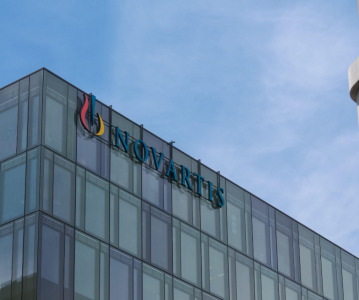
News Novartis signs US$3.2 bn subcutaneous delivery deal with Alteogen
Swiss pharma giant secures access to Korean biotech's ALT-B4 hyaluronidase platform in milestone-heavy agreement, marking Alteogen's fourth major licensing deal of 2026 as competition intensifies in the subcutaneous drug delivery space.
-

News Women in Pharma: The philosophy of pharmaceutical leadership
In this latest instalment of our Women in Pharma series, we sit down with Clarissa Sowemimo-Coker, Chief Strategy Officer at Ambrose Healthcare and CPHI Middle East Advisory Board Member.
-

News The PSCI Supplier Partnership - Collaboration for Responsible Supply Chains
About the Pharmaceutical Supply Chain Initiative The Pharmaceutical Supply Chain Initiative (PSCI) is the leading, member-led association for pharmaceutical companies working collaboratively to build responsible supply chains. Founded in 2006 and es... -

News AstraZeneca shares plunge 8.9% after reports of BMS talks
Britain's largest drugmaker lost more than GBP£17 billion in market value following reports of preliminary merger discussions with Bristol Myers Squibb that could create a pharmaceutical giant worth nearly US$400 billion, though investors rem... -

News GSK announces £400 million investment in new Cambridge R&D centre
Pharmaceutical giant to establish flagship research facility on Cambridge Biomedical Campus as part of strategic pipeline acceleration
-

News The CPHI Sustainability Summit - Where Conversation Becomes Collaboration
The Report Was Never the Destination - “The future of pharmaceutical sustainability won’t be shaped by individual organisations working in isolation. It will be shaped by partnerships, shared expertise and the willingness to work diffe... -

News Trump's generic drug tariffs set to reshape global pharmaceutical supply chains
The US president has announced plans to impose tariffs of up to 200% on imported generic medicines from August 2028, giving manufacturers a two-year window to establish domestic production facilities. The move threatens to upend a global supply chain t... -

News Building Safer, More Responsible Pharmaceutical Supply Chains: PSCI Global Audit Insights
The Pharmaceutical Supply Chain Initiative (PSCI) has released its seventh annual Audit Findings Analysis Report, offering unprecedented insights into supplier practices across the global pharmaceutical and healthcare industry.With a record-breaking 24...