
NanoViricides Raises $20 Million in a Registered Direct Offering

NanoViricides, Inc. has raised approximately $20 million in a registered direct offering. The company will receive approximately $18.8 million in proceeds after deducting approximately $1.2 million for broker commissions and attorney fees.
"We were very pleased with the strong interest from select institutional investors and existing shareholders," said Eugene Seymour, MD, MPH, CEO of the company. He added: "It enabled us to raise $20 million in place of the intended $10 milion, taking advantage of the 20% additional allowance option for our registered securities."
Dr Seymour further explained: "We anticipate that the additional capital will be sufficient to last through Phase I and II human clinical studies of our injectable FluCide drug candidate, and through initial human clinical trials of DengueCide." DengueCide has received Orphan Drug designation by the US FDA as well as the European Medical Agency (EMA). These designations entail significant benefits, allowing the company to prioritise development of DengueCide.
With this raise, the company now has approximately $40 million cash in hand (including non-current cash-based assets), which the company believes is sufficient for its planned activities for the next 3 years and beyond. With these funds, in addition to certain clinical trials for FluCide and DengueCide, the company anticipates that it will also be able to expedite development of its four other drug candidates, namely, Oral FluCide, HerpeCide, HIVCide, and EKCCide into the FDA approval process.
With this additional capital, the company anticipates being able to hire necessary staff to accommodate the expanded workload as it gears several of its drug candidates towards IND filings over the near future. Further, the company will be able to continue its R&D programmes, such as nanoviricides against Rabies and Ebola/Marburg viruses. The company believes it will also be able to pursue additional R&D programmes such as developing nanoviricides against the recently discovered Middle East Respiratory Syndrome (MERS) virus (a Coronavirus), as well as other opportunities. These programmes should result in additional drug candidates in the company's already robust pipeline in the near future.
Related News
-
News GSK announces £400 million investment in new Cambridge R&D centre
Pharmaceutical giant to establish flagship research facility on Cambridge Biomedical Campus as part of strategic pipeline acceleration
-

News Understanding the Benefits and Advances of Cleanroom Technology
In an industry where precision and sterility are crucial concerns, cleanrooms play a vital role in maintaining the integrity of pharmaceutical products like drugs, vaccines, and other medical products. So, what is a cleanroom?
-

News AbbVie secures GBP£1.2 billion deal for Gilgamesh’s psychedelic programme
AbbVie has penned a significant agreement to acquire the bretisilocin programme from Gilgamesh Pharmaceuticals for up to £1.2 billion, marking a bold step in the pharmaceutical giant's quest to develop treatments for psychiatric disorders. -

News Gates Foundation commits US$2.5 billion to women’s health research
The Bill & Melinda Gates Foundation has announced a substantial US$2.5 billion commitment to accelerate research and development focused exclusively on women's health through 2030.
-

News Mid-year review: notable FDA drug approvals of 2025
As we fly past the halfway point of 2025, the pharmaceutical landscape reliably continues to evolve with innovative therapies addressing critical medical needs. The FDA has already approved 17 groundbreaking medications this year, each representin... -

News US FDA announces new priority vouchers for accelerated review times
The US FDA announced a new priority program for drug developers – the Commissioner’s National Priority Voucher (CNPV) program aims to enhance the health interests of the US by allowing drug developers to redeem a voucher, shortening th... -
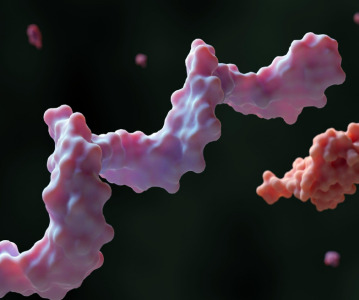
News Google-backed start-up raises US$600 million to support AI drug discovery and design
London-based Isomorphic Labs, an AI-driven drug design and development start-up backed by Google’s AI research lab DeepMind, has raised US$600 million in its first external funding round by Thrive Capital. The funding will provide further power t... -
News AstraZeneca to invest US$2.5 billion in Beijing R&D centre
Amid investigations of former AstraZeneca China head Leon Wang in 2024, AstraZeneca have outlined plans to establish its sixth global strategic R&D centre in China. Their aim is to further advance life sciences in China with major research and manufact...