
New ambr 15 fermentation micro-scale bioreactor system provides enhanced microbial strain screening
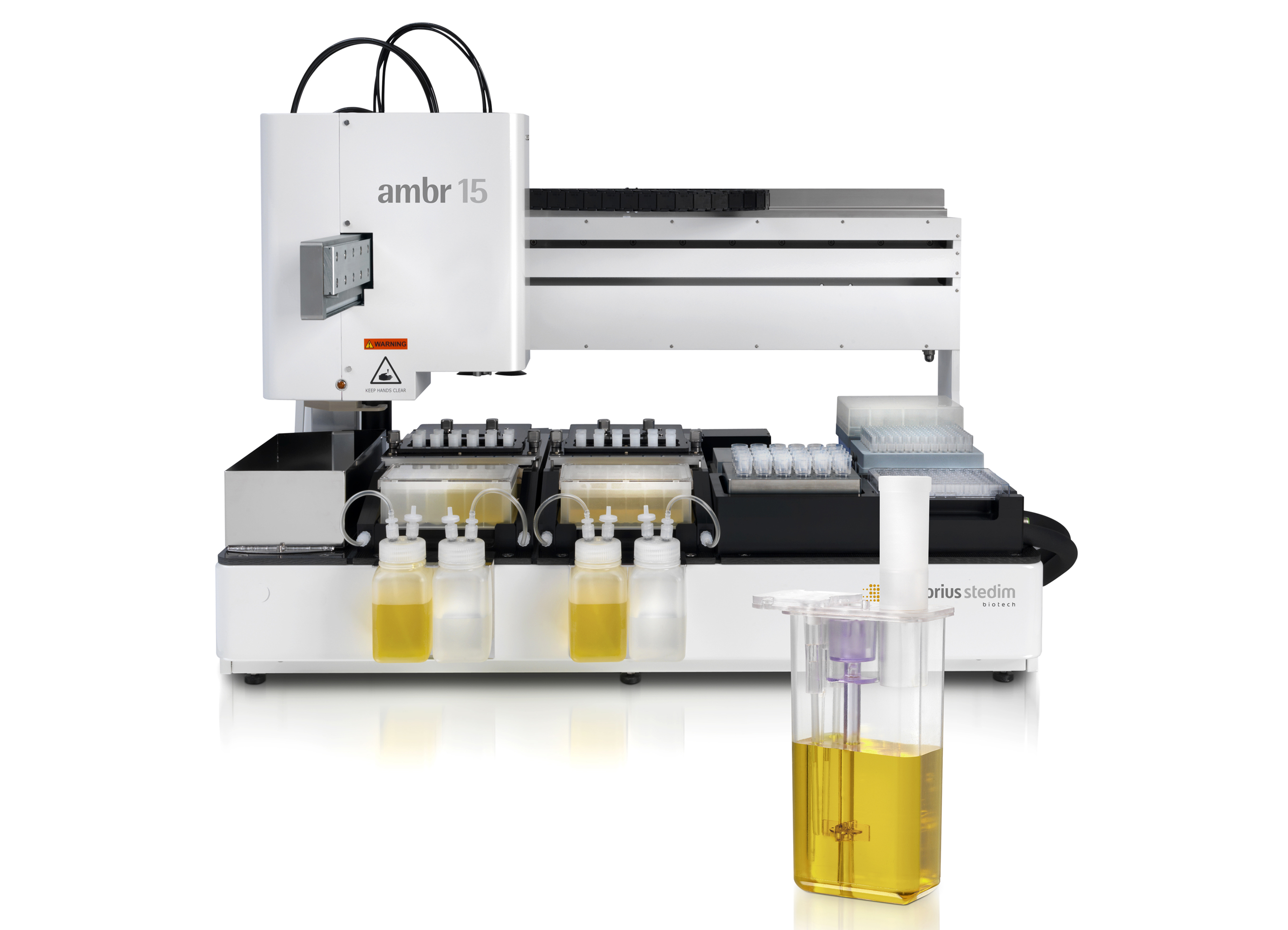
New ambr 15 fermentation micro bioreactor system designed to enhance microbial strain screening applications.
The system offers parallel processing and walk-away control of 24 micro bioreactors.
Sartorius Stedim Biotech (SSB) has introduced the new ambr 15 fermentation system, an automated micro bioreactor system designed to enhance microbial strain screening with advanced capabilities supporting fed-batch microbial cultures.
The new system, based on the gold-standard ambr 15 micro bioreactor technology, has been designed to meet the requirements of microbial fermentation. It comprises 24 single-use stirred micro bioreactors (each with an 8–12 mL working volume) integrated to a user-friendly, automated workstation. The system offers parallel processing and walk-away control of 24 micro bioreactors, providing fermentation scientists with efficient, consistent results from an enhanced early stage screening platform.
ambr 15 fermentation has been designed to deliver high oxygen transfer rates, rapid pH and feed additions and is ideally suited for assessing the effects of different strains with microbial cultures. The ambr 15 fermentation measures pH and DO every 12 seconds and there are pumped liquid lines for base and feed addition in each micro bioreactor, enabling tight pH control and a semicontinuous feed supply. Additionally, the 10-mL working volume allows multiple samplings throughout the fermentation run to assess culture growth and protein production, thus providing more detailed process understanding.
The single-use micro bioreactor vessel contains an impeller suitable for fermentation and provides enhanced capability compared to shaking culture systems. The pH range of 6–8 is ideal for biopharm E. coli applications and cultures with similar requirements. As the ambr 15 vessels are single use and supplied sterile this eliminates cleaning and sterilization time, thus decreasing turnaround times between runs by many hours.
Dr Barney Zoro, ambr Product Manager at SSB explained: “Scientists have been trying to model microbial fermentation and screen microbial strains using shake plates and flasks but these devices are poor early-stage models as they are not able to achieve representative cell densities, and do not allow monitoring and control of pH or DO. With these issues in mind, we developed ambr 15 fermentation and have data showing system consistency, repeatability and predictive selection of strains. This demonstrates that the system is an excellent tool for enhanced screening applications and we are confident that fermentation scientists will significantly reduce their time and resource demands when performing enhanced microbial strain selection studies using an ambr 15 fermentation system.”
Related News
-
News Novartis signs US$3.2 bn subcutaneous delivery deal with Alteogen
Swiss pharma giant secures access to Korean biotech's ALT-B4 hyaluronidase platform in milestone-heavy agreement, marking Alteogen's fourth major licensing deal of 2026 as competition intensifies in the subcutaneous drug delivery space.
-

News Women in Pharma: The philosophy of pharmaceutical leadership
In this latest instalment of our Women in Pharma series, we sit down with Clarissa Sowemimo-Coker, Chief Strategy Officer at Ambrose Healthcare and CPHI Middle East Advisory Board Member.
-
News The PSCI Supplier Partnership - Collaboration for Responsible Supply Chains
About the Pharmaceutical Supply Chain Initiative The Pharmaceutical Supply Chain Initiative (PSCI) is the leading, member-led association for pharmaceutical companies working collaboratively to build responsible supply chains. Founded in 2006 and es... -

News AstraZeneca shares plunge 8.9% after reports of BMS talks
Britain's largest drugmaker lost more than GBP£17 billion in market value following reports of preliminary merger discussions with Bristol Myers Squibb that could create a pharmaceutical giant worth nearly US$400 billion, though investors rem... -

News GSK announces £400 million investment in new Cambridge R&D centre
Pharmaceutical giant to establish flagship research facility on Cambridge Biomedical Campus as part of strategic pipeline acceleration
-

News The CPHI Sustainability Summit - Where Conversation Becomes Collaboration
The Report Was Never the Destination - “The future of pharmaceutical sustainability won’t be shaped by individual organisations working in isolation. It will be shaped by partnerships, shared expertise and the willingness to work diffe... -

News Trump's generic drug tariffs set to reshape global pharmaceutical supply chains
The US president has announced plans to impose tariffs of up to 200% on imported generic medicines from August 2028, giving manufacturers a two-year window to establish domestic production facilities. The move threatens to upend a global supply chain t... -
News Building Safer, More Responsible Pharmaceutical Supply Chains: PSCI Global Audit Insights
The Pharmaceutical Supply Chain Initiative (PSCI) has released its seventh annual Audit Findings Analysis Report, offering unprecedented insights into supplier practices across the global pharmaceutical and healthcare industry.With a record-breaking 24...