
New Pre-validated Fluorinated Fragment Library Boosts Drug Screening Efficiency
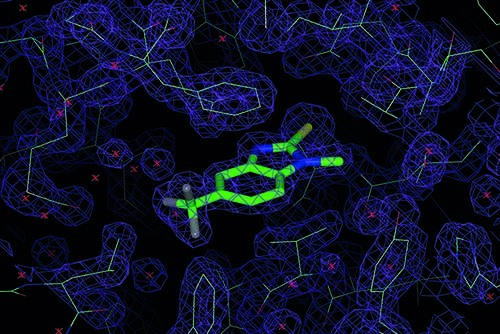
Researchers engaged in drug discovery can now benefit from a new library of fluorinated compounds with superior drug-like characteristics designed to maximize the efficiency of fluorine Nuclear Magnetic Resonance (NMR) and X-ray crystallography screening, saving both time and cost in the process.
The new Maybridge Fluorine Labeled Fragment Library is a diverse fragment library of 480 fluorinated compounds that has been developed in collaboration with Argenta, a Charles River Company, the University of Kent and the United Kingdom’s Biotechnology and Biological Sciences Research Council.
Approximately 20% of known drug compounds contain a fluorine atom. As such, fluorine NMR is a fast-growing technique used in fragment screening, an important method for rapid identification of new lead molecules in drug discovery due to the higher hit probability and fewer fragments needing to be screened.
“Fragment-based lead discovery programmes are often arduous and expensive, with many hits failing further down the line because of less-than-optimal physico-chemical properties,” said Simon Pearce, product manager, global chemicals, Thermo Fisher Scientific. “Our new library of drug-like fluorinated fragments has been carefully designed and curated to reduce these problems, giving researchers a head start in drug discovery programs.”
This Maybridge Library was derived from more than 5000 fluorinated candidates and was optimized through a stringent biophysical selection process to increase the probability of hit generation. Each compound has been validated using fluorine and standard NMR, solubility testing, X-ray crystallography and Surface Plasmon Resonance (SPR) techniques to provide the highest quality. Product highlights include
• Design maximizes structural diversity, pharmacophore content and Rule of Three (Ro3) compliance, while eliminating compounds with reactive functional groups
• Compound solubility has been confirmed (aqueous PBS >=1 mM / DMSO >= 100 mM) and screened by SPR against proteins from two different gene families
• Comprehensive pre-qualification designed to give researchers a high hit probability and diminished risk of future attrition, while generating excellent data from screening programs in a shorter time-frame
·• Quality filters, including adherence to “Rule of Three,” assuring that every compound possesses key physio-chemical properties frequently found in orally active drugs.
Related News
-
News GSK announces £400 million investment in new Cambridge R&D centre
Pharmaceutical giant to establish flagship research facility on Cambridge Biomedical Campus as part of strategic pipeline acceleration
-

News Understanding the Benefits and Advances of Cleanroom Technology
In an industry where precision and sterility are crucial concerns, cleanrooms play a vital role in maintaining the integrity of pharmaceutical products like drugs, vaccines, and other medical products. So, what is a cleanroom?
-

News AbbVie secures GBP£1.2 billion deal for Gilgamesh’s psychedelic programme
AbbVie has penned a significant agreement to acquire the bretisilocin programme from Gilgamesh Pharmaceuticals for up to £1.2 billion, marking a bold step in the pharmaceutical giant's quest to develop treatments for psychiatric disorders. -

News Gates Foundation commits US$2.5 billion to women’s health research
The Bill & Melinda Gates Foundation has announced a substantial US$2.5 billion commitment to accelerate research and development focused exclusively on women's health through 2030.
-
News Mid-year review: notable FDA drug approvals of 2025
As we fly past the halfway point of 2025, the pharmaceutical landscape reliably continues to evolve with innovative therapies addressing critical medical needs. The FDA has already approved 17 groundbreaking medications this year, each representin... -
News US FDA announces new priority vouchers for accelerated review times
The US FDA announced a new priority program for drug developers – the Commissioner’s National Priority Voucher (CNPV) program aims to enhance the health interests of the US by allowing drug developers to redeem a voucher, shortening th... -
News Google-backed start-up raises US$600 million to support AI drug discovery and design
London-based Isomorphic Labs, an AI-driven drug design and development start-up backed by Google’s AI research lab DeepMind, has raised US$600 million in its first external funding round by Thrive Capital. The funding will provide further power t... -
News AstraZeneca to invest US$2.5 billion in Beijing R&D centre
Amid investigations of former AstraZeneca China head Leon Wang in 2024, AstraZeneca have outlined plans to establish its sixth global strategic R&D centre in China. Their aim is to further advance life sciences in China with major research and manufact...