
New treatments to solve global antibiotic crisis could reach the market by 2020

New ARB technology rejuvenates existing antibiotics to outsmart antibiotic resistance.
Helperby Therapeutics has developed a novel answer to the clear and present danger of antimicrobial resistance - Antibiotic Resistance Breakers (ARBs).
Doctors increasingly rely on last resort antibiotics such as carbapenems and colistin, but as harmful bacteria continue to mutate, this final line of resistance will eventually fail.
Helperby’s solution to this critical problem is Antibiotic Resistance Breakers - novel technology that rejuvenates existing antibiotics into long-term effective combination therapies.
The World Health Organisation (WHO) has identified the immediate threat from three critical priority pathogens for which there is currently limited antibiotic protection:
The most dangerous bacteria are CRE, causing severe and often fatal infections such as septicaemia and pneumonia. CRE has spread from Asia into Europe and the US, is epidemic and doubles every 2 years.
Helperby’s ARB rejuvenate existing antibiotics, enabling them to puncture the tough cell wall of CRE and other evolving superbugs to allow existing last-resort antibiotics to effectively do their work. The ARB rejuvenation process can be performed repeatedly on different combinations of existing antibiotics to outsmart resistance.
“New classes of antibiotics are difficult to develop, and none have been marketed for over 30 years,” said Prof Anthony Coates, Chief Scientific Officer of Helperby Therapeutics. “It is therefore imperative we keep existing antibiotics working.”
“We are one of only six companies in the world that have new antibiotics in clinical development which are potentially effective against all three of WHO’s critical priority pathogens.”
ARBs are novel, effective and transferable, potentially producing many variants of new antibiotic combination. One ARB can be applied to multiple different classes of antibiotics, reducing the size, time and resource in Phase III clinical trials normally required for new chemical entities.
Importantly, Helperby’s solution meets WHO's four innovation criteria for effective new antibiotic protection:
Helperby has two formats of ARB combination currently in development, in six programs; of these three are in clinical trials.
“Helperby’s Antibiotic Resistance Breakers are an imminent solution to all three of the critical priority pathogens as identified by the WHO,” added Professor Coates. “We are potentially just 3–5 years away from the market.”
Related News
-
News GSK announces £400 million investment in new Cambridge R&D centre
Pharmaceutical giant to establish flagship research facility on Cambridge Biomedical Campus as part of strategic pipeline acceleration
-
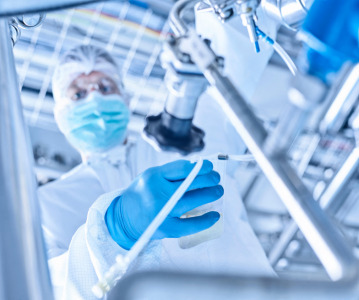
News Understanding the Benefits and Advances of Cleanroom Technology
In an industry where precision and sterility are crucial concerns, cleanrooms play a vital role in maintaining the integrity of pharmaceutical products like drugs, vaccines, and other medical products. So, what is a cleanroom?
-

News AbbVie secures GBP£1.2 billion deal for Gilgamesh’s psychedelic programme
AbbVie has penned a significant agreement to acquire the bretisilocin programme from Gilgamesh Pharmaceuticals for up to £1.2 billion, marking a bold step in the pharmaceutical giant's quest to develop treatments for psychiatric disorders. -

News Gates Foundation commits US$2.5 billion to women’s health research
The Bill & Melinda Gates Foundation has announced a substantial US$2.5 billion commitment to accelerate research and development focused exclusively on women's health through 2030.
-
News Mid-year review: notable FDA drug approvals of 2025
As we fly past the halfway point of 2025, the pharmaceutical landscape reliably continues to evolve with innovative therapies addressing critical medical needs. The FDA has already approved 17 groundbreaking medications this year, each representin... -
News US FDA announces new priority vouchers for accelerated review times
The US FDA announced a new priority program for drug developers – the Commissioner’s National Priority Voucher (CNPV) program aims to enhance the health interests of the US by allowing drug developers to redeem a voucher, shortening th... -
News Google-backed start-up raises US$600 million to support AI drug discovery and design
London-based Isomorphic Labs, an AI-driven drug design and development start-up backed by Google’s AI research lab DeepMind, has raised US$600 million in its first external funding round by Thrive Capital. The funding will provide further power t... -
News AstraZeneca to invest US$2.5 billion in Beijing R&D centre
Amid investigations of former AstraZeneca China head Leon Wang in 2024, AstraZeneca have outlined plans to establish its sixth global strategic R&D centre in China. Their aim is to further advance life sciences in China with major research and manufact...