
NIH Scientists Develop Candidate Vaccine Against Respiratory Syncytial Virus
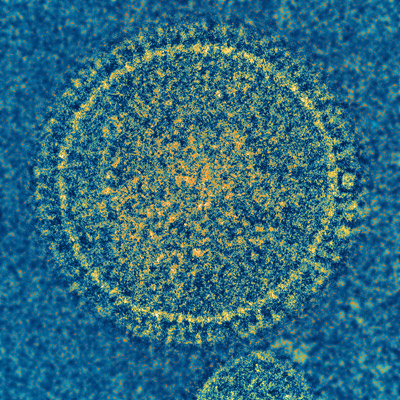
An experimental vaccine to protect against respiratory syncytial virus (RSV), a leading cause of illness and hospitalisation among very young children, elicited high levels of RSV-specific antibodies when tested in animals, according to a report in the journal Science.
Early-stage human clinical trials of the candidate vaccine are planned. Scientists from the Vaccine Research Center (VRC), National Institute of Allergy and Infectious Diseases (NIAID), part of the National Institutes of Health, built on their previous findings about the structure of a critical viral protein to design the vaccine. The team was led by Peter D. Kwong, PhD, and Barney S. Graham, MD, PhD.
“Many common diseases of childhood are now vaccine-preventable, but a vaccine against RSV infection has eluded us for decades,” said NIAID Director Anthony S. Fauci, MD. “This work marks a major step forward. Not only does the experimental vaccine developed by our scientists elicit strong RSV-neutralizing activity in animals, but, more broadly, this technique of using structural information to inform vaccine design is being applied to other viral diseases, including HIV/AIDS.”
Earlier this year, the VRC team obtained atomic-level details of an RSV protein — called the fusion (F) glycoprotein — bound to a broadly neutralizing human RSV antibody. The protein–antibody complex gave scientists their first look at the F glycoprotein as it appears before it fuses with a human cell. In this pre-fusion shape, F glycoprotein contains a region vulnerable to attack by broadly neutralizing antibodies (antibodies able to block infection from the common strains of RSV).
Once RSV fuses with a cell, this vulnerable area, named antigenic site zero by the researchers, is no longer present on the rearranged F protein. In natural RSV infection, the immune system produces antibodies against both the pre-fusion and post-fusion forms of F glycoprotein. Buut the antibodies to antigenic site zero, which is only present on the pre-fusion form, have much stronger neutralizing activity. Therefore, a vaccine against RSV would have greater chance of success by eliciting antibodies directed at F glycoprotein in its pre-fusion configuration.
In their current publication, Drs Kwong and Graham describe how they used this structural information to design and engineer F glycoprotein variants that retained antigenic site zero even when no antibody was bound to it. The goal was to create stable variants that could serve as the foundation for a vaccine capable of eliciting a potent antibody response. The researchers designed more than 100 variants; of these, three were shown by X-ray crystallography to retain the desired structure. The engineered variants were then used as vaccines in a series of experiments in mice and rhesus macaques.
In mice and macaques, the researchers found that the more stable the protein, the higher the levels of neutralizing antibodies elicited by vaccination. The levels of antibody made in response to one of the engineered F glycoproteins were more than 10 times higher than those produced following vaccination with post-fusion F glycoprotein and well above levels needed to protect against RSV infection.
“Here is a case in which information gained from structural biology has provided the insight needed to solve an immunological puzzle and apply the findings to address a real-world public health problem,” said Dr Graham. He and the VRC scientists are continuing to refine the engineered F glycoproteins and hope to launch early-stage human clinical trials of a candidate RSV vaccine as soon as clinical grade material can be manufactured, a process that takes about 18–24 months.
“Previously, structure-based vaccine design held promise at a conceptual level,” said Dr Kwong. “This advance delivers on that promise and sets the stage for similar applications of structure-guided design to effective vaccines against other pathogens.”
Dr Fauci added: “This latest advance underscores the advantages of the VRC’s organizational design, where experts in RSV virology, vaccinology and clinical studies, such as Dr Graham, are in daily contact with Dr Kwong and others who are experts in structural biology. Such close collaboration across disciplines allows for rapid testing of new approaches to a given problem.”
Related News
-
News GSK announces £400 million investment in new Cambridge R&D centre
Pharmaceutical giant to establish flagship research facility on Cambridge Biomedical Campus as part of strategic pipeline acceleration
-

News Understanding the Benefits and Advances of Cleanroom Technology
In an industry where precision and sterility are crucial concerns, cleanrooms play a vital role in maintaining the integrity of pharmaceutical products like drugs, vaccines, and other medical products. So, what is a cleanroom?
-

News AbbVie secures GBP£1.2 billion deal for Gilgamesh’s psychedelic programme
AbbVie has penned a significant agreement to acquire the bretisilocin programme from Gilgamesh Pharmaceuticals for up to £1.2 billion, marking a bold step in the pharmaceutical giant's quest to develop treatments for psychiatric disorders. -

News Gates Foundation commits US$2.5 billion to women’s health research
The Bill & Melinda Gates Foundation has announced a substantial US$2.5 billion commitment to accelerate research and development focused exclusively on women's health through 2030.
-

News Mid-year review: notable FDA drug approvals of 2025
As we fly past the halfway point of 2025, the pharmaceutical landscape reliably continues to evolve with innovative therapies addressing critical medical needs. The FDA has already approved 17 groundbreaking medications this year, each representin... -
News US FDA announces new priority vouchers for accelerated review times
The US FDA announced a new priority program for drug developers – the Commissioner’s National Priority Voucher (CNPV) program aims to enhance the health interests of the US by allowing drug developers to redeem a voucher, shortening th... -
News Google-backed start-up raises US$600 million to support AI drug discovery and design
London-based Isomorphic Labs, an AI-driven drug design and development start-up backed by Google’s AI research lab DeepMind, has raised US$600 million in its first external funding round by Thrive Capital. The funding will provide further power t... -
News AstraZeneca to invest US$2.5 billion in Beijing R&D centre
Amid investigations of former AstraZeneca China head Leon Wang in 2024, AstraZeneca have outlined plans to establish its sixth global strategic R&D centre in China. Their aim is to further advance life sciences in China with major research and manufact...