
Optibrium supports global health through academic and not-for-profit consortium

Access to StarDrop will support development of new treatments for neglected diseases via global health programme.
Optibrium will make its StarDrop technology available to an international consortium of academic and not-for profit organisations. Under the agreement, licensed access to StarDrop software will be provided to support drug discovery projects as part of a global health programme focused on developing new treatments for neglected diseases.
Consortium partners are involved in projects to facilitate and speed up the development of therapies for the treatment of so-called “neglected” diseases such as leishmaniasis, sleeping sickness, Chagas disease, malaria, tuberculosis and paediatric HIV. StarDrop’s unique optimisation and compound selection capabilities will help researchers to efficiently focus their efforts on researching candidate drugs with the best chance of success in becoming effective therapies in the treatment and prevention of these diseases.
Dr Matthew Segall, Optibrium’s CEO, commented: “We are very proud to support such an important effort to address some of the world’s biggest health issues. Drug development is enormously time consuming, expensive and high risk, due to the challenge of finding high quality candidate drugs with the right balance of efficacy and safety. By adopting StarDrop, consortium partners will have global access to a wide range of tools allowing their researchers to quickly target compounds with the highest chance of success and avoid missed opportunities.”
Neglected diseases continue to cause significant morbidity and mortality in the developing world. Of 850 new therapeutic products approved between 2000 and 2011, only 4% (and only 1% of all approved NCEs) were indicated for neglected diseases, even though these diseases account for 11% of the global disease burden.
Partner organisations included in the agreement are: Anacor, Broad Institute, Epichem, Infectious Disease Research Institute (IDRI), Medicines for Malaria Venture (MMV), Sandexis, TB Alliance, UNICAMP, University of California San Diego, University of Cape Town, University of Dundee and University of Liverpool.
Related News
-
News GSK announces £400 million investment in new Cambridge R&D centre
Pharmaceutical giant to establish flagship research facility on Cambridge Biomedical Campus as part of strategic pipeline acceleration
-
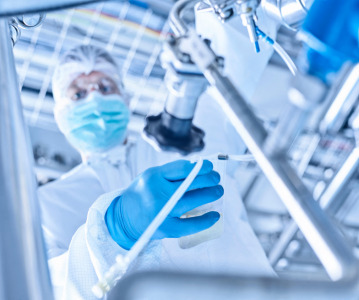
News Understanding the Benefits and Advances of Cleanroom Technology
In an industry where precision and sterility are crucial concerns, cleanrooms play a vital role in maintaining the integrity of pharmaceutical products like drugs, vaccines, and other medical products. So, what is a cleanroom?
-

News AbbVie secures GBP£1.2 billion deal for Gilgamesh’s psychedelic programme
AbbVie has penned a significant agreement to acquire the bretisilocin programme from Gilgamesh Pharmaceuticals for up to £1.2 billion, marking a bold step in the pharmaceutical giant's quest to develop treatments for psychiatric disorders. -

News Gates Foundation commits US$2.5 billion to women’s health research
The Bill & Melinda Gates Foundation has announced a substantial US$2.5 billion commitment to accelerate research and development focused exclusively on women's health through 2030.
-

News Mid-year review: notable FDA drug approvals of 2025
As we fly past the halfway point of 2025, the pharmaceutical landscape reliably continues to evolve with innovative therapies addressing critical medical needs. The FDA has already approved 17 groundbreaking medications this year, each representin... -

News US FDA announces new priority vouchers for accelerated review times
The US FDA announced a new priority program for drug developers – the Commissioner’s National Priority Voucher (CNPV) program aims to enhance the health interests of the US by allowing drug developers to redeem a voucher, shortening th... -
News Google-backed start-up raises US$600 million to support AI drug discovery and design
London-based Isomorphic Labs, an AI-driven drug design and development start-up backed by Google’s AI research lab DeepMind, has raised US$600 million in its first external funding round by Thrive Capital. The funding will provide further power t... -
News AstraZeneca to invest US$2.5 billion in Beijing R&D centre
Amid investigations of former AstraZeneca China head Leon Wang in 2024, AstraZeneca have outlined plans to establish its sixth global strategic R&D centre in China. Their aim is to further advance life sciences in China with major research and manufact...