
Pharma contract packaging, a future focusing on collaboration
Contract packaging in pharmaceuticals is more than just what kind of blister packaging you want to go for, there are so many key elements that depend on a niche of needs and regulations. This article focuses on what partnerships in the field are focusing on to increase sustainability and patient adherence.
Contract packaging is an important part of the pharmaceutical industry, but not always the first thing that comes to mind – you normally think about the medicines themselves before the packaging they come in. However, the housing of these medicines are vital to their distribution, integrity, and often times, their actual mechanism of application.
As such, pharmaceutical contract packaging is an established, and still growing market. The current market value (as of 2024) stood at USD17.6 billion, and by 2034 is projected to be worth USD43.46 billion, which is a CAGR of 9.8% over that 10 year period [1].
Covering primary, secondary and tertiary packaging, the field can cover niche and unique challenges, tailored directly for extremely specific use cases. It is a vital aspect to patient access, ensuring medicine can safely reach those it’s designed for, as well as increasing adherence. Main drivers behind the growth of the industry in recent years is the ever increasing demand for more efficient and convenient packaging solutions, the necessity to keep up to date with evolving regulatory requirements, and the opportunity for growth in the generics and biologics markets.
Technological trends catalysing the market
The main areas where trends are appearing, with a view to expansion and the development of new technology, are in sustainable solutions, patient adherence, and safety.
Several cases where technology is being used to capitalise on these trends were highlighted at Pharmapack 2025 in the Contract Packaging conference track.
The Lightning Talk on: ‘The Digital Revolution in Clinical Trials: Relabelling with Digital Display Labels’ given by Matt Bolton, Director of Clinical Supply Technology Innovation, MSD and John Bratton, Technical Director, Smurfit Westrock covered the challenges associated with traditional relabelling processes in clinical trials, the advantages of adopting digital display labels, and the potential impact on the future of healthcare research.
Digital display labels are a revolutionary technology in the contract packaging industry. Paper labels have been used since the beginning of packaging effectively, and there are many challenges associated with these. They are printed just once, any changes are impossible to make, they have to contain a vast amount of information, meaning the size of the labelling becomes an issue, and the languages they are provided in are limited. With digital labels, they can be changed and updated anytime and anywhere, they don’t have to printed on large pieces of paper, and they can then be available in several languages.
“If you can change the label content anywhere throughout the supply chain, that’s very advantageous.”
This not only has advantages for the provider in being able to save time and costs surrounding updates, but the reduction in paper lessens the impact on the environment, and the different formats available mean greater patient accessibility.
As part of another Lightning Talk: 'The Growing Need for Small-Batch Production and Embracing Digitalisation and Cutting-Edge Technologies' from Lars Skole, Managing Director, LSS - Labelling Systems Scandinavia, Skole demonstrates the need for technology to increase patients accessibility and compliance.
“Smaller countries have special regulatory requirements and different languages, so even if they have a high volume product, they may have to manufacture it in low volumes for certain countries.”
“We see a lot of new medicines and treatments being developed. Often, they are treatments for rare diseases, so lower volume batches, that are growing the most.”
Skole highlights the advantages of using technology in small batch production, were robotics can be used in production lines to enhance safety and quality, as well as efficiency of production, which is particularly imperative in making personalised medicines for rare diseases.
Across the industry collaboration is becoming more and more essential between businesses. In contract packaging this is no different, with interaction between CPOs and CDMOs becoming critical throughout the value chain.
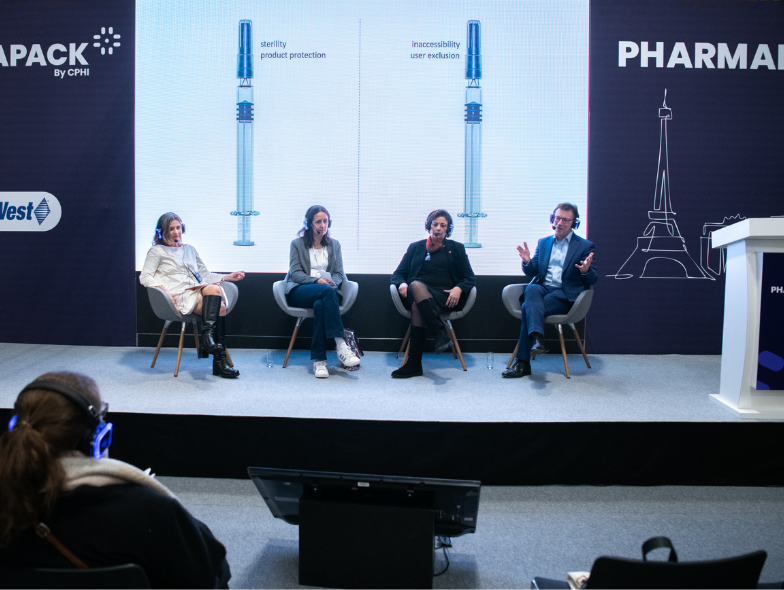
At Pharmapack 2025 a panel discussion covered CPO and CDMO Strategic Visions. The panellists decreed there were several aspects where collaboration could be improved, and this would then have a knock on effect for improving processes within the industry. They talked about streamlining ideas and creating a standardised template, which would better enable integrated services, leading to a reduction in lead times, removing inefficiencies and overall improving the quality of the offering.
When discussing specific needs of customers and handling of specific materials the panel stated that mindset, communication, and transparency is key, where you can have several different parties working together for a common goal for one customer.
By having partnerships built on these strengths, CDMOs can leverage the expertise offered by CPOs to meet the specific needs of a customer more effectively and safely.
Another advantage offered by creating more diverse strategic partnerships is an increased access to new markets [2]. By partnering with organisations in different geographies and different fields of expertise companies are better able to expand, and reach cohorts that would previously have been unattainable.
Sustainable partners for more sustainable practice
These relationships are not only beneficial for the client and the businesses, but also for the environment. More and more the foundations of such partnerships are being built around sustainability and ESG, and these are become ever present in strategic visions for the future.
This can encompass innovative techniques and technology, and align with wider industry goals surrounding renewable energy, decarbonisation, and recycling. Some organisations consider this so important that it is a critical point for the partnership, and they won’t enter into relationships with other organisations that do not align with their ESG principles and goals.
Small-batch production again proves itself to be of advantage, by enabling greater flexibility, a reduction in waste, and faster market response, there is a much smaller environmental impact.
Some packaging solutions are designed with sustainability built in from the beginning of the design process. Ready-to-use solutions decrease the need for complex fill finish packaging, again reducing production time. Reuseable autoinjectors are steadily making their way in to the pharmaceutical packaging market, providing a more environmentally friendly option for patients with conditions that require treatment with more regular dosing. These technologies also fall in line with recent regulation from the European Commission as part of the Packaging and Packaging Waste Regulation 2025/40 (PPWR).
One prototype for a reuseable autoinjector, whereby the cassette can be replaced and recycled with each use was presented at Pharmapack by developers Team Consulting and AstraZeneca, represented by Tom Etheridge and Andrew Chapman respectively. They set out their development process for the autoinjector as well as challenges they encountered, so as to give an example to the industry and provide a basis for further development to build from. They also emphasised how their prototype was developed with the user in mind, and designed to enhance usability and therefore patient compliance.
The new PPWR legislation has four main aims:
• Prevent and reduce packaging waste, including through more reuse and refill systems.
• Make all packaging on the EU market recyclable in an economically viable way by 2030.
• Safely increase the use of recycled plastics in packaging.
• Decrease the use of virgin materials in packaging and put the sector on track to climate neutrality by 2050.
Regulation and guidelines such as these are exactly what the industry is demanding so as to be able to unite for a common goal, and be pushed to meet these, with relevant consequences. What we’ll want to see next is if these regulations can be taken and matched from a global perspective, ensuring the whole pharmaceutical packaging industry is aligned.
Sources:
1. Towards Packaging. Pharmaceutical Contract Packaging Market Size - Latest Insight. [Date accessed 14/02/2025] www.towardspackaging.com/insights/pharmaceutical-contract-packaging-market-sizing
2. Contract Pharma. The Evolution of Strategic Partnerships in the Pharmaceutical Industry. [Date accessed 14/02/2025] www.contractpharma.com/exclusives/the-evolution-of-strategic-partnerships-in-the-pharmaceutical-industry/
Related News
-

News Pharmapack 2025 Shows Industry's Green Transformation Challenges
The pharmaceutical industry is facing a sustainability revolution, with new data from the Pharmapack 2025 Strategic Insights & Research survey highlighting both progress and persistent obstacles across the sector.
-
News Women in Pharma: Connecting accessible pharma packaging to patients – a Pharmapack Special
Throughout our Women in Pharma series, we aim to highlight how CPHI events encourage discussions around diversity, equity, and inclusion initiatives in the pharmaceutical industry.
-

News CPHI Podcast Series: Packaging expert perspectives at Pharmapack 2025
This month's podcast episode sounds a little different, covering the latest event in Paris – Pharmapack 2025. Digital Editor Lucy Chard speaks to several experts direct from the floor of the show, bringing you right in on the action.&nbs... -

News The 2025 Pharmapack Awards: recognising innovation and patient centricity
This year in Paris the Pharmapack Awards recognised the achievements across categories in the industry, aswell as including some new categories to highlight exceptional work and people.
-

News Pharmapack 2025: From the Floor in Paris
Pharmpack gears up for another week in Paris at the Porte De Versailles. The two-day show taking place on the 22–23 January, will cover contract packaging, device innovation, and sustainability among other topics.
-

News Visibility, Integration, and Opportunity with CPOs: A Pharmapack Interview
At Pharmapack 2025 in Paris the informative content tracks this year will feature a Contract Packaging track. A critically important topic for those working in the field, which speaker Alexander Schäfer from Sharp Services discusses in the fo... -

News Pharmapack Sustainability Partner Interview: Sustainable blister packaging
At Pharmapack we are increasingly aiming to bring sustainability into the event, into the conversations people have, into the content we present and into the running of the show itself. This year we are working with a number of Sustainability Partners ...