
Possible new treatment for Ewing sarcoma
Discovery of a new drug with high potential to treat Ewing sarcoma, an often deadly cancer of children and young adults.
Discovery of a new drug with high potential to treat Ewing sarcoma, an often deadly cancer of children and young adults, and the previously unknown mechanism behind it, come hand-in-hand in a new study by researchers from Huntsman Cancer Institute (HCI) at the University of Utah. The report appears in the online issue of the journal Oncogene.
"Ewing sarcoma is almost always caused by a cancer-causing protein called EWS/FLI," said Stephen Lessnick, M.D., Ph.D., director of HCI's Center for Children's Cancer Research, professor in the Department of Pediatrics at the University of Utah School of Medicine, and an HCI investigator.
In the lab, Lessnick and his colleagues found that an enzyme, called lysine specific demethylase (LSD-1), interacts with EWS/FLI to turn off gene expression in Ewing sarcoma. By turning off specific genes, the EWS/FLI-LSD1 complex causes Ewing sarcoma development. "This makes LSD-1 an important target for the development of new drugs to treat Ewing sarcoma," Lessnick said.
"For a long time, we've known that EWS/FLI works by binding to DNA and turning on genes that activate cancer formation," said Lessnick. "It was a surprise to find out that it turns genes off as well.
"The beauty, if there's anything beautiful about a nasty disease like this, is that if we can inhibit EWS/FLI, we can inhibit this cancer, because EWS/FLI is the master regulator of Ewing sarcoma," Lessnick added.
While Lessnick and his colleagues worked on EWS/FLI in their basic science lab, Sunil Sharma, M.D., director of HCI's Center for Investigational Therapeutics, professor in the Department of Medicine at the University of Utah, and an HCI investigator, had already focused on LSD-1 as a possible target for new cancer treatments and had been working for several years to design drugs that would inhibit its actions.
"We had found that LSD-1 was important for regulation of a variety of properties in several different cancers, including acute leukemias, breast and prostate cancers," Sharma said.
"After Steve showed that LSD-1 was directly regulating the function of EWS/FLI, we teamed up with him to see whether the LSD inhibitors we had discovered worked in Ewing sarcoma models," Sharma said. "Our tests in Ewing sarcoma tissue cultures show they are extremely potent."
Lessnick and Sharma are now working together to further test LSD inhibitors in animal models as they work toward approval of a first-in-man clinical trial. In addition, Lessnick's basic science research on LSD-1 in Ewing sarcoma continues. "We think it may play a larger role in Ewing sarcoma than simply turning off a handful of genes, and we're looking into that," said Lessnick.
"This is a great example of how collaboration between the therapeutics and basic science programs can lead to new treatments for patients—one of HCI's highest goals," said Sharma.
Graduate student Savita Sankar of the Lessnick lab was instrumental in this research; her work is supported by the Howard Hughes Medical Institute (HHMI) under the University of Utah Med into Grad Program. This work was also supported by NIH/NCI grants R01 CA140394 and P30 CA042014, as well as funding from the Imaging, Diagnostics, and Therapeutics Program at Huntsman Cancer Institute. Work in the Lessnick lab is also supported by Sydney's Incredible Defeat of Ewing's Sarcoma (SIDES).
The mission of Huntsman Cancer Institute (HCI) at the University of Utah is to understand cancer from its beginnings, to use that knowledge in the creation and improvement of cancer treatments, to relieve the suffering of cancer patients, and to provide education about cancer risk, prevention, and care. HCI is a National Cancer Institute-Designated Cancer Center, which means that it meets the highest national standards for cancer care and research and receives support for its scientific endeavors. HCI is also a member of the National Comprehensive Cancer Network (NCCN), a not-for-profit alliance of the world's leading cancer centers that is dedicated to improving the quality and effectiveness of care provided to patients with cancer.
Related News
-
News GSK announces £400 million investment in new Cambridge R&D centre
Pharmaceutical giant to establish flagship research facility on Cambridge Biomedical Campus as part of strategic pipeline acceleration
-
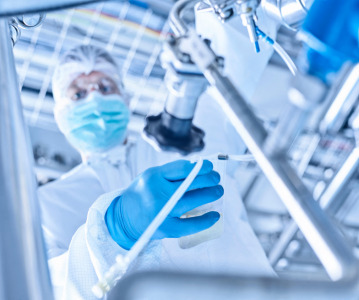
News Understanding the Benefits and Advances of Cleanroom Technology
In an industry where precision and sterility are crucial concerns, cleanrooms play a vital role in maintaining the integrity of pharmaceutical products like drugs, vaccines, and other medical products. So, what is a cleanroom?
-

News AbbVie secures GBP£1.2 billion deal for Gilgamesh’s psychedelic programme
AbbVie has penned a significant agreement to acquire the bretisilocin programme from Gilgamesh Pharmaceuticals for up to £1.2 billion, marking a bold step in the pharmaceutical giant's quest to develop treatments for psychiatric disorders. -
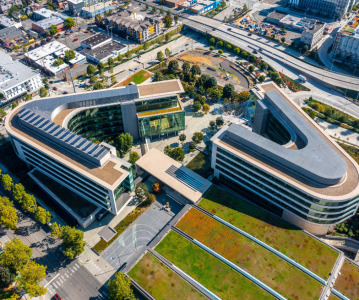
News Gates Foundation commits US$2.5 billion to women’s health research
The Bill & Melinda Gates Foundation has announced a substantial US$2.5 billion commitment to accelerate research and development focused exclusively on women's health through 2030.
-

News Mid-year review: notable FDA drug approvals of 2025
As we fly past the halfway point of 2025, the pharmaceutical landscape reliably continues to evolve with innovative therapies addressing critical medical needs. The FDA has already approved 17 groundbreaking medications this year, each representin... -
News US FDA announces new priority vouchers for accelerated review times
The US FDA announced a new priority program for drug developers – the Commissioner’s National Priority Voucher (CNPV) program aims to enhance the health interests of the US by allowing drug developers to redeem a voucher, shortening th... -
News Google-backed start-up raises US$600 million to support AI drug discovery and design
London-based Isomorphic Labs, an AI-driven drug design and development start-up backed by Google’s AI research lab DeepMind, has raised US$600 million in its first external funding round by Thrive Capital. The funding will provide further power t... -
News AstraZeneca to invest US$2.5 billion in Beijing R&D centre
Amid investigations of former AstraZeneca China head Leon Wang in 2024, AstraZeneca have outlined plans to establish its sixth global strategic R&D centre in China. Their aim is to further advance life sciences in China with major research and manufact...