
Regen BioPharma sees success in Its pre-clinical small molecule optimization program for NR2F6

The company's small molecule drug program is aimed at treating cancer and autoimmune diseases .
Regen BioPharma has completed the first phase of its small molecule optimization program, which involved synthesizing more than 40 analogues of its initial lead compounds (RG-NA01, RG-NA02, RG-NI01 and RG-NI02). The compounds synthesized consist of activators (RG-NA01 and RG-NA02) and inhibitors (RG-NI01 and RG-NI02) of NR2F6 and were identified using Regen's patented screening methodology and unique chemical libraries.
With the crucial first phase completed the company, along with ChemDiv, can move forward with the optimization process, which involves introducing the synthesized compound analogues to cells specifically designed to respond to NR2F6 agonists and learning more about their potency.
The NR2F6 nuclear receptor has been identified as a potentially very important immune cell inhibitor (an immune checkpoint) and cancer stem cell differentiator. The NR2F6 program at Regen aims to identify antagonists of NR2F6 in an effort to unleash the cancer-killing potential of a patient's own immune system, as well as identifying agonists which should suppress the immune system in diseases where the immune system is over-activated, such as autoimmunity (e.g.: arthritis).
"The ChemDiv team has synthesized more than 40 analogues of our initial small molecules and has begun screening them for activity. We are excited that several of these compounds have dose-dependent activity in our cellular assay," says Harry Lander, President and Chief Scientific Officer of Regen. "We are currently evaluating the relationship between the structure of the compounds and their activity. By performing careful and thoughtful medicinal chemistry, we expect to be in a strong position in a few months, in terms of having a well-understood optimized activator and inhibitor of NR2F6."
David Koos, Regen BioPharma's Chairman & CEO noted: "We have identified compounds that will likely cause the body's own immune system to fight cancer and autoimmune diseases, such as arthritis, by manipulating the immune checkpoint NR2F6. A key differentiator for Regen is being able to deliver these therapies through small molecule treatments (e.g.; pill form), which should produce an easier and more comfortable approach for patients, leading to fewer and less severe side effects than currently used therapies."
Related News
-
News GSK announces £400 million investment in new Cambridge R&D centre
Pharmaceutical giant to establish flagship research facility on Cambridge Biomedical Campus as part of strategic pipeline acceleration
-
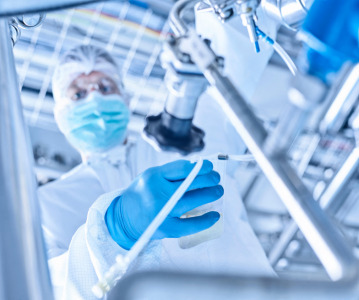
News Understanding the Benefits and Advances of Cleanroom Technology
In an industry where precision and sterility are crucial concerns, cleanrooms play a vital role in maintaining the integrity of pharmaceutical products like drugs, vaccines, and other medical products. So, what is a cleanroom?
-

News AbbVie secures GBP£1.2 billion deal for Gilgamesh’s psychedelic programme
AbbVie has penned a significant agreement to acquire the bretisilocin programme from Gilgamesh Pharmaceuticals for up to £1.2 billion, marking a bold step in the pharmaceutical giant's quest to develop treatments for psychiatric disorders. -
News Gates Foundation commits US$2.5 billion to women’s health research
The Bill & Melinda Gates Foundation has announced a substantial US$2.5 billion commitment to accelerate research and development focused exclusively on women's health through 2030.
-
News Mid-year review: notable FDA drug approvals of 2025
As we fly past the halfway point of 2025, the pharmaceutical landscape reliably continues to evolve with innovative therapies addressing critical medical needs. The FDA has already approved 17 groundbreaking medications this year, each representin... -

News US FDA announces new priority vouchers for accelerated review times
The US FDA announced a new priority program for drug developers – the Commissioner’s National Priority Voucher (CNPV) program aims to enhance the health interests of the US by allowing drug developers to redeem a voucher, shortening th... -
News Google-backed start-up raises US$600 million to support AI drug discovery and design
London-based Isomorphic Labs, an AI-driven drug design and development start-up backed by Google’s AI research lab DeepMind, has raised US$600 million in its first external funding round by Thrive Capital. The funding will provide further power t... -
News AstraZeneca to invest US$2.5 billion in Beijing R&D centre
Amid investigations of former AstraZeneca China head Leon Wang in 2024, AstraZeneca have outlined plans to establish its sixth global strategic R&D centre in China. Their aim is to further advance life sciences in China with major research and manufact...