
Roche and BioLamina Start Collaboration to Develop Novel Cell Culture Systems
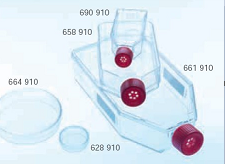
Research focus on investigation of laminin-based approaches
Penzberg, Germany and Stockholm, Sweden, March 6, 2013 / B3C newswire / - Roche (SIX: RO, ROG; OTCQX: RHHBY) and BioLamina, Stockholm, Sweden today announced the signing of a research and development agreement to jointly develop new cell culture systems for various applications, including stem cell research. The collaboration will focus on assessing laminin-based in-vitro cell culture matrices offering highly physiological microenvironments for living cells. Under the terms of the agreement Roche will provide R&D funding and scientific expertise to BioLamina. Financial details were not disclosed.
Laminins are proteins located in the extracellular matrix providing the stability essential for cell growth and behaviour. They are the only protein group in this environment that have a tissue-specific distribution, including expression of specific laminins during embryonic development. This makes them a very interesting target for new biologically relevant cell culturing techniques.
“Our aim is to develop laminin-based culture systems that provide biologically relevant, standardized environments”, said Ruedi Stoffel, Head of Biochemical Reagents & Custom Biotech at Roche. “We are looking forward to this collaboration to build on the revolutionary cell cultivation techniques developed by our colleagues at the Karolinska Institute and BioLamina.”
“We’re delighted that Roche has recognized the potential of our products and technology, which we believe will significantly complement their expertise and capabilities in cell culturing,” states Kristian Tryggvason, CEO of BioLamina. “By resolving many of the technical obstacles currently blocking the road to modern cell therapy, we expect this collaboration to accelerate the development of innovative cell culturing solutions that possibly can enable cell therapy”.
Related News
-

News GSK announces £400 million investment in new Cambridge R&D centre
Pharmaceutical giant to establish flagship research facility on Cambridge Biomedical Campus as part of strategic pipeline acceleration
-
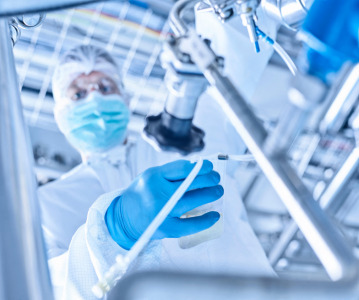
News Understanding the Benefits and Advances of Cleanroom Technology
In an industry where precision and sterility are crucial concerns, cleanrooms play a vital role in maintaining the integrity of pharmaceutical products like drugs, vaccines, and other medical products. So, what is a cleanroom?
-

News AbbVie secures GBP£1.2 billion deal for Gilgamesh’s psychedelic programme
AbbVie has penned a significant agreement to acquire the bretisilocin programme from Gilgamesh Pharmaceuticals for up to £1.2 billion, marking a bold step in the pharmaceutical giant's quest to develop treatments for psychiatric disorders. -

News Gates Foundation commits US$2.5 billion to women’s health research
The Bill & Melinda Gates Foundation has announced a substantial US$2.5 billion commitment to accelerate research and development focused exclusively on women's health through 2030.
-

News Mid-year review: notable FDA drug approvals of 2025
As we fly past the halfway point of 2025, the pharmaceutical landscape reliably continues to evolve with innovative therapies addressing critical medical needs. The FDA has already approved 17 groundbreaking medications this year, each representin... -

News US FDA announces new priority vouchers for accelerated review times
The US FDA announced a new priority program for drug developers – the Commissioner’s National Priority Voucher (CNPV) program aims to enhance the health interests of the US by allowing drug developers to redeem a voucher, shortening th... -
News Google-backed start-up raises US$600 million to support AI drug discovery and design
London-based Isomorphic Labs, an AI-driven drug design and development start-up backed by Google’s AI research lab DeepMind, has raised US$600 million in its first external funding round by Thrive Capital. The funding will provide further power t... -

News AstraZeneca to invest US$2.5 billion in Beijing R&D centre
Amid investigations of former AstraZeneca China head Leon Wang in 2024, AstraZeneca have outlined plans to establish its sixth global strategic R&D centre in China. Their aim is to further advance life sciences in China with major research and manufact...