
Sartorius integrates online biomass measurement to its ambr systems for microbial applications
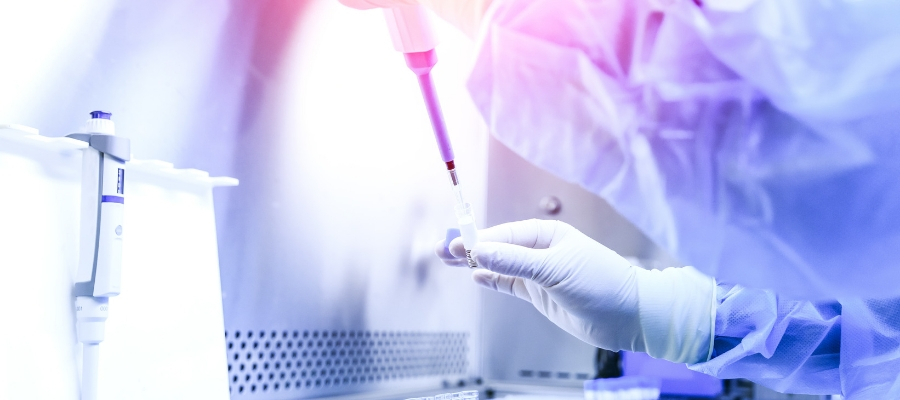
Scientists to rapidly obtain detailed process understanding and control over their microbial cultures.
Sartorius Stedim Biotech (SSB) is introducing integrated online biomass measurement to its ambr 15 fermentation and ambr 250 high throughput systems for microbial applications.
Already well known in the industry for fast-tracking microbial screening studies and shortening process development timelines, the ambr 15 fermentation and ambr 250 high throughput systems operate up to 24 single-use stirred bioreactor cultures in parallel. With the integration of online biomass measurement, SSB has addressed the bottleneck associated with offline sampling. The new online biomass capability features state-of-the-art non-invasive reflectance measurement, saving time, effort and sample volume. It enables scientists to rapidly obtain detailed process understanding and control over their microbial cultures.
Online biomass measurement provides real-time non-invasive, continuous growth monitoring of 24 microbial cultures running in parallel. The reflectance-based technology means that sampling is not required. Instead, it uses lasers to transmit light through the base of each bioreactor and microprocessors to translate this into a reflectance measurement. With a wide dynamic measurement range, and bubble correction factors to take into account gas bubble density, reliable online measurements can be achieved even in high aeration and agitation environments. Through a user calibration process, online reflectance can be displayed as online optical density (OD), wet cell weight (WCW) or dry cell weight (DCW). To date, the online biomass measurement has been successfully tested with different organisms including E.coli, Pichia pastoris, Saccharomyces cerevisiae, Streptomyces spp. and Corynebacterium spp.
“Fermentation scientists often have to perform time-consuming sampling to monitor growth and initiate process control based on offline data. Sample preparation and manual data handling can introduce variability and errors; it may also necessitate samples being taken at unsociable hours or over weekends,” explained Alison Rees-Manley, ambr 15 Product Manager at SSB. “By integrating innovative biomass monitoring technology into our ambr systems for microbial applications, we enable real-time growth data to be used for more advanced process control. We’re confident that these ambr systems will help scientists by reducing the burden of offline sampling and providing better process understanding and greater control of microbial cultures. This will result in more accurate and predictive data for cost-efficient protein production,” she added.

Related News
-
News Novartis signs US$3.2 bn subcutaneous delivery deal with Alteogen
Swiss pharma giant secures access to Korean biotech's ALT-B4 hyaluronidase platform in milestone-heavy agreement, marking Alteogen's fourth major licensing deal of 2026 as competition intensifies in the subcutaneous drug delivery space.
-

News Women in Pharma: The philosophy of pharmaceutical leadership
In this latest instalment of our Women in Pharma series, we sit down with Clarissa Sowemimo-Coker, Chief Strategy Officer at Ambrose Healthcare and CPHI Middle East Advisory Board Member.
-

News The PSCI Supplier Partnership - Collaboration for Responsible Supply Chains
About the Pharmaceutical Supply Chain Initiative The Pharmaceutical Supply Chain Initiative (PSCI) is the leading, member-led association for pharmaceutical companies working collaboratively to build responsible supply chains. Founded in 2006 and es... -

News AstraZeneca shares plunge 8.9% after reports of BMS talks
Britain's largest drugmaker lost more than GBP£17 billion in market value following reports of preliminary merger discussions with Bristol Myers Squibb that could create a pharmaceutical giant worth nearly US$400 billion, though investors rem... -

News GSK announces £400 million investment in new Cambridge R&D centre
Pharmaceutical giant to establish flagship research facility on Cambridge Biomedical Campus as part of strategic pipeline acceleration
-

News The CPHI Sustainability Summit - Where Conversation Becomes Collaboration
The Report Was Never the Destination - “The future of pharmaceutical sustainability won’t be shaped by individual organisations working in isolation. It will be shaped by partnerships, shared expertise and the willingness to work diffe... -

News Trump's generic drug tariffs set to reshape global pharmaceutical supply chains
The US president has announced plans to impose tariffs of up to 200% on imported generic medicines from August 2028, giving manufacturers a two-year window to establish domestic production facilities. The move threatens to upend a global supply chain t... -

News Building Safer, More Responsible Pharmaceutical Supply Chains: PSCI Global Audit Insights
The Pharmaceutical Supply Chain Initiative (PSCI) has released its seventh annual Audit Findings Analysis Report, offering unprecedented insights into supplier practices across the global pharmaceutical and healthcare industry.With a record-breaking 24...