
Scaling up and speeding up: pharma’s manufacturing challenges during COVID-19
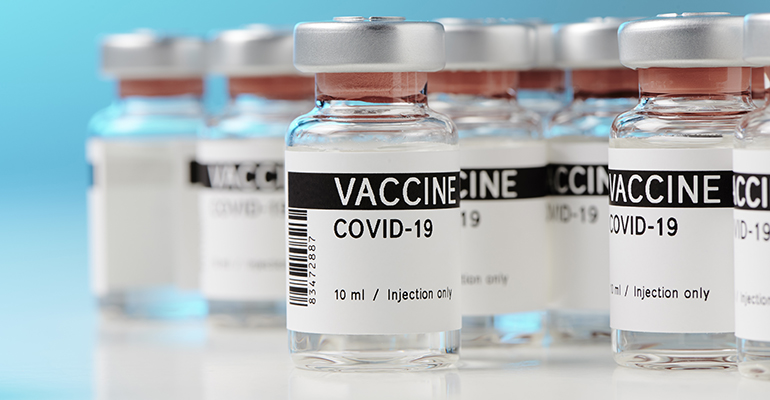
As biopharma searches for vaccines and treatments to alleviate the crisis, how can companies manage shortened timelines to rapidly develop and manufacture safe and effective products on a global scale? A recent Endpoints webinar sheds some light
As the world continues to absorb the shock of the ongoing deadly coronavirus pandemic, and amid the dawning realisation that its impact is not going to fade away anytime soon, attention has naturally shifted to vaccines.
With over 70 potential vaccines for COVID-19 in clinical development, projections on regulatory approval vary drastically, but the consensus is that the first approved product won’t see the light of day until deep into 2021 at the earliest. However, the more pessimistic appraisals, such as global analytics firm Clarivate’s recent AI-driven research, warn these timelines could stretch into several years rather than months.
But it is not just R&D teams that are feeling the pressure to deliver. The deeper question of when doses of a safe, effective vaccine will be available for distribution to the global population can only be answered by pharma’s ability to scale up manufacturing and distribution to unprecedented levels and in record time.
In an Endpoints webinar on April 28 entitled ‘Drug Manufacturing in a Time of Coronavirus’, a panel of industry executives shared their views on how the pharmaceutical supply chain has had to adapt accordingly to respond to the current crisis, in terms of accelerating clinical development and building out vaccine production capacity.
Reducing timelines
One immediate challenge for vaccine producers is how to collapse development timelines to put themselves in the position of being ready to manufacture in a matter of months.
Biotech firm Moderna has recently been awarded a grant of up to USD483 million from US government agency Biomedical Advanced Research and Development Authority (BARDA) to accelerate development of its mRNA vaccine candidate (mRNA-1273) against SARS-CoV-2. The money will also be used to fund manufacturing process scale-up to enable large-scale production for pandemic response and Moderna plans to hire 150 new team members to support these efforts.
Juan Andres, Chief Technical Operations and Quality Officer, at Moderna told the audience that the firm had managed to get a head-start from using its personalized cancer vaccine platform to manufacture the first clinical batch of mRNA-1273.
“When you’re doing personalised products especially cancer, the patient cannot wait,” he said. “In that programme, we go from sampling of the cancer patient to the moment we get the personalised vaccine back in 40 days. We have the equipment and technology to do that and that has allowed us to go faster.”
Concurrent approach
He added that the key to speeding up vaccine development is the ability to run different projects concurrently, usually by partnering effectively: “You need to anticipate and be willing to partner to go into a situation like this. You cannot be sequential, which is the normal way you do development.”
Sanofi’s vaccine unit, Sanofi Pasteur is using its recombinant DNA technology – which it utilised successfully for its flu vaccine -- to develop a potential vaccine for coronavirus.
John Shiver, Global Head of R&D at Sanofi Pasteur, said that his company began large-scale manufacturing preparations as soon as it started initial research prep with the recombinant system and hopes to be manufacturing supply-ready by the time it reaches the efficacy data stage.
“Investment in manufacture such as reagents, the logistics, and how you’re going to schedule things during the clinical development – these are things you don’t usually do with a vaccine,” he said, adding that Sanofi Pasteur is ultimately aiming at providing 100-600 million doses per year.
Providing the CDMO perspective, Kay Schmidt, Senior Vice President, Technical Operations at Catalent told the webinar that companies should also be fully prepared for when things go wrong.
“While your plan needs to accommodate the concurrency and multiple approaches, there has to be a ‘plan B’ because some things are going to fail,” she said.
Targeting readiness
Juan Andres at Moderna said that to reach the necessary state of manufacturing preparedness, the biotech firm was increasing batch sizes, moving processes onto an ‘industrial’ scale and moving rapidly into additional phases.
“We are partnering with CMOs, material suppliers and other pharmaceutical companies in order to get very fast,” he said, referencing the “generous” funding from BARDA to not only complete the clinical development to target a scale-up but “also do all the clinical programme as we move along.”
Japan’s Takeda Pharma is developing a plasma-derived hyperimmune globulin therapy (TAK-888) to treat high-risk patients with COVID-19 and also took on a co-leading position in the CoVIg-19 Plasma Alliance with nine other companies to accelerate development of treatments from plasma derived from patients who have recovered from COVID-19.
Stefan Wildt, Head, Pharmaceutical Sciences and Cell Therapies Translational Engine, Takeda, said that this collaborative approach has many advantages to speeding up the pre-clinical stage in terms of data sharing, identifying and eliminating roadblocks and communicating with regulatory authorities.
But like other companies, Takeda is already evaluating much further down the development lifecycle and sees partnerships as fundamental to success, he added.
“Robust supply chains are needed, so how can we be together and stronger to get vaccines to billions?” he said. “We need collaboration and speed, there is a sense of urgency and we should look at this with a global mindset, not just development but also supply.”
Scaling up
The challenges in scaling up manufacturing capacity to cope with global coronavirus vaccine demand are going to be monumental, particularly with the emphasis on speed and the fact that it is difficult to repurpose current vaccine manufacturing facilities.
John Shiver at Sanofi Pasteur said there are many “unknowns” on how to industrialize to the scale of hundreds of millions or billions of doses and the length of time required to build that kind of manufacturing capacity.
“Most manufacturing centres for vaccines are custom made for a particular vaccine, not for flexible manufacture, at least not to the extent that you might need for a product that looks very different,” he explained.
Looking into the future
The panel members were asked for their personal views on how long it is likely to take before there are enough coronavirus vaccines and treatments for the hospitalised patients to make a big difference on a global basis.
Juan Andres at Moderna replied that the industry needs to “be cautious on the answer and very aggressive on implementation; you need to prepare for the most aggressive scenarios without taking additional risks. I think we need to go for hundreds of millions if not a billion plus doses during 2021.”
Agreeing that the industry needs to make significant accomplishments by next year, Stefan Wildt at Takeda said that it “shouldn’t lose sight of other measures to help overcome disease. It’s a multi-pronged effort where we can relieve the hospital systems and society of burdens along the way. It can’t be fast enough.”
Kay Schmidt at Catalent said that from a CDMO’s viewpoint, the goal should be a 4-5 x timeline reduction versus standards of the processes that it controls such as method development, method execution and manufacturing a clinical trial vaccine, which she described as aggressive.
“There is no answer, only aspiration to do it as fast as possible,” she concluded.
“Maybe there could be some earlier access for the most at-risk to the earlier vaccines like Moderna’s or ours’ once we start getting the clinical data,” said John Shiver at Sanofi Pasteur. “The therapeutics are the most important stopgap at this point. Hopefully we’ll end up with a number of vaccines that collectively make the billions of doses that are going to be required to vaccinate the world.”
In conclusion, the panellists asserted that the crisis could also present an opportunity to manufacturers to re-evaluate their processes and be much better prepared for any future pandemics.
“Next time this comes around, we should no longer be surprised,” said Stefan Wildt at Takeda. “There’s an opportunity statement here also. Why don’t we look at some of these operations and understand where competition does and doesn’t make sense because ultimately we’re a purpose-driven industry. Even though we compete with each other, what we want to do is make a difference.”
Join us for expert insight and analysis on how pharma is responding to the COVID-19 pandemic in several key areas. This upcoming May 4-8, CPHI North America is exclusively launching five days of content-rich webinars - kicking off the CPHI Webinar Series.
Completely free to attend, and exclusively delivered to your home office, our series of five one-hour webinars will offer a week’s supply of quality content from industry leaders, focusing on important, cutting-edge topics such as the industry’s response to the COVID-19 pandemic, and the impact of the crisis on global supply chains, drug manufacturing, discovery and development.
Register here for webinars
Related News
-

News Swiss pharma industry warns US tariffs could harm global patient care
The Swiss pharmaceutical sector has raised alarms over new US tariffs on medicines, warning of disrupted supply chains, increased costs, and delayed innovation, all of which could jeopardise patient access to essential treatments worldwide.
-
News Women in Pharma: CPHI India – India’s Pharmaceutical Industry and Gender Inclusion Challenges
India’s pharmaceutical industry has emerged as a significant player in the global market, valued at USD 50 billion in FY 2023-2024, according to Frost & Sullivan’s analysis. This sector encompasses a diverse portfolio, including drugs, vacc... -
News Biogen acquires Apellis Pharmaceuticals to boost immunology and rare disease profile
Biogen Inc. has announced its acquisition of Apellis Pharmaceuticals, Inc., a move that is set to significantly enhance its growth portfolio in immunology and rare diseases. The agreement, valued at approximately US$5.6 billion, will see Biogen purchas... -
News Gilead Sciences acquires Ouro Medicines for over US$2 billion
Gilead Sciences confirms a deal to take over Ouro Medicines, adding to a portfolio of therapies for autoimmune diseases.
-
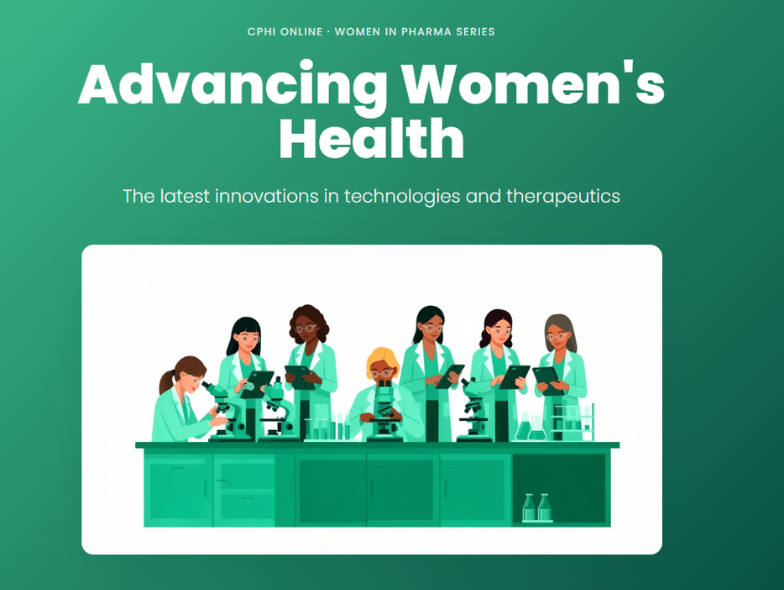
News Women in Pharma: Advancing Women's Health
Discover the latest innovations in technologies and therapeutics that are revolutionising women's health in our latest CPHI Online Women in Pharma infographic.
-

News CPHI Pharma Awards 2026: Recognising Excellence in an Evolving Industry
Submissions now open — deadline May 16
-
News Dr Reddy's to launch generic semaglutide in India
Dr Reddy’s Laboratories, one of India’s leading pharmaceutical companies, is preparing to launch a generic version of semaglutide, branded as Obeda, in March. Obeda is expected to provide a more affordable alternative to Ozempic a... -
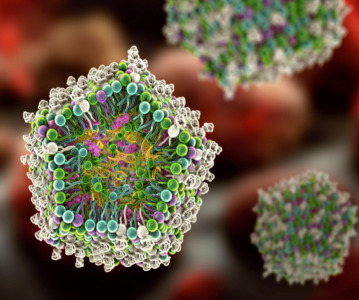
News Frontier Biotech and GSK Forge RNA Therapy Partnership
Frontier Biotechnologies and GSK have entered a global licensing agreement to advance small interfering RNA (siRNA) therapeutics. This collaboration grants GSK exclusive rights to develop and commercialise two promising siRNA candidates, marking a mile...