
Self-Assembling Anti-Cancer Molecules Created in Minutes: like 'LEGO Death Star'?
Researchers have developed a simple and versatile method for making artificial anti-cancer molecules that mimic the properties of one of the body’s natural defence systems.
The chemists, led by Professor Peter Scott at the University of Warwick, UK, have been able to produce molecules that have a similar structure to peptides which are naturally produced in the body to fight cancer and infection.
Published in Nature Chemistry, the molecules produced in the research have proved effective against colon cancer cells in laboratory tests, in collaboration with Roger Phillips at the Institute for Cancer Therapeutics, Bradford, UK.
Artificial peptides had previously been difficult and prohibitively expensive to manufacture in large quantities, but the new process takes only minutes and does not require costly equipment. Also, traditional peptides that are administered as drugs are quickly neutralised by the body’s biochemical defences before they can do their job.
A form of complex chemical self-assembly, the new method developed at Warwick addresses these problems by being both practical and producing very stable molecules. The new peptide mimics, called triplexes, have a similar 3D helix form to natural peptides.
“The chemistry involved is like throwing Lego blocks into a bag, giving them a shake, and finding that you made a model of the Death Star” says Professor Scott. “The design to achieve that takes some thought and computing power, but once you’ve worked it out the method can be used to make a lot of complicated molecular objects.”
Describing the self-assembly process behind the artificial peptides Professor Scott says: “When the organic chemicals involved, an amino alcohol derivative and a picoline, are mixed with iron chloride in a solvent, such as water or methanol, they form strong bonds and are designed to naturally fold together in minutes to form a helix. It’s all thermodynamically downhill. The assembly instructions are encoded in the chemicals themselves.”
“Once the solvent has been removed we are left with the peptide mimics in the form of crystals”, says Professor Scott. “There are no complicated separations to do, and unlike a Lego model kit there are no mysterious bits left over. In practical terms, the chemistry is pretty conventional. The beauty is that these big molecules assemble themselves. Nature uses this kind of self-assembly to make complex asymmetric molecules like proteins all the time, but doing it artificially is a major challenge.”
Whilst the peptide mimics created by the process have been successful in laboratory tests on colon cancer cells they will require further research before they can be used in clinical trials on patients. Nevertheless they are made of simple building blocks and in early tests the team have shown that they have very low toxicity to bacteria. “This is very unusual and promising selectivity,” says Professor Scott.
Related News
-
News GSK announces £400 million investment in new Cambridge R&D centre
Pharmaceutical giant to establish flagship research facility on Cambridge Biomedical Campus as part of strategic pipeline acceleration
-
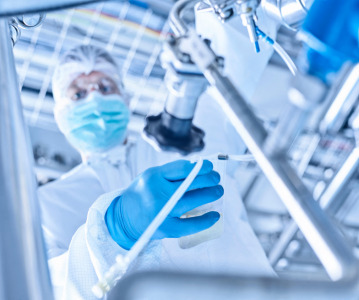
News Understanding the Benefits and Advances of Cleanroom Technology
In an industry where precision and sterility are crucial concerns, cleanrooms play a vital role in maintaining the integrity of pharmaceutical products like drugs, vaccines, and other medical products. So, what is a cleanroom?
-

News AbbVie secures GBP£1.2 billion deal for Gilgamesh’s psychedelic programme
AbbVie has penned a significant agreement to acquire the bretisilocin programme from Gilgamesh Pharmaceuticals for up to £1.2 billion, marking a bold step in the pharmaceutical giant's quest to develop treatments for psychiatric disorders. -

News Gates Foundation commits US$2.5 billion to women’s health research
The Bill & Melinda Gates Foundation has announced a substantial US$2.5 billion commitment to accelerate research and development focused exclusively on women's health through 2030.
-
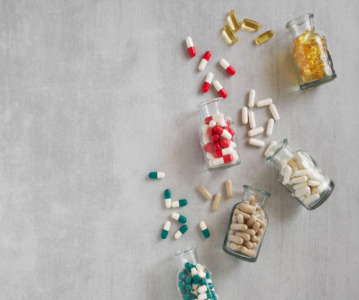
News Mid-year review: notable FDA drug approvals of 2025
As we fly past the halfway point of 2025, the pharmaceutical landscape reliably continues to evolve with innovative therapies addressing critical medical needs. The FDA has already approved 17 groundbreaking medications this year, each representin... -
News US FDA announces new priority vouchers for accelerated review times
The US FDA announced a new priority program for drug developers – the Commissioner’s National Priority Voucher (CNPV) program aims to enhance the health interests of the US by allowing drug developers to redeem a voucher, shortening th... -
News Google-backed start-up raises US$600 million to support AI drug discovery and design
London-based Isomorphic Labs, an AI-driven drug design and development start-up backed by Google’s AI research lab DeepMind, has raised US$600 million in its first external funding round by Thrive Capital. The funding will provide further power t... -
News AstraZeneca to invest US$2.5 billion in Beijing R&D centre
Amid investigations of former AstraZeneca China head Leon Wang in 2024, AstraZeneca have outlined plans to establish its sixth global strategic R&D centre in China. Their aim is to further advance life sciences in China with major research and manufact...