
Study demonstrates potential of blood test for early lung cancer detection
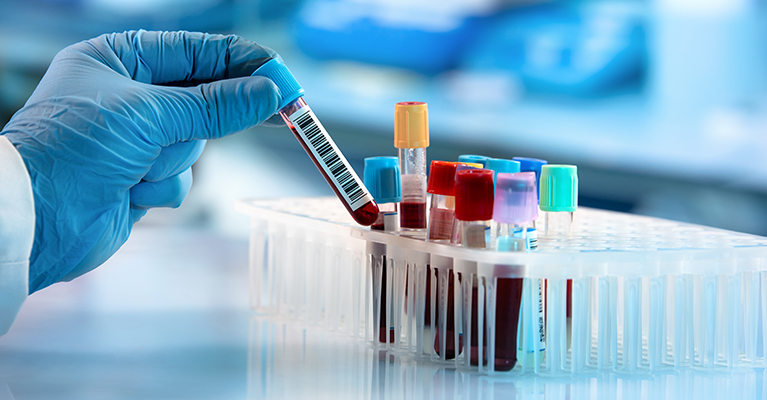
Ground-breaking trial demonstrates potential of blood test which harnesses the power of the immune system to reduce late detection of lung cancer.
Data, presented by Professor Frank Sullivan (Chief Investigator on the ECLS trial) demonstrates the potential of Oncimmune’s EarlyCDT Lung test to reduce the incidence of patients with late-stage lung cancer at diagnosis, compared with standard clinical diagnosis.
In a randomised controlled trial of 12,209 people in Scotland at high risk of developing lung cancer, it was shown that more people were diagnosed at an early stage of the disease in the two years after taking the EarlyCDT Lung test than those in the control arm who received standard clinical care.
The findings, presented at the 2019 World Conference on Lung Cancer hosted by the International Association for the Study of Lung Cancer (IASLC) in Barcelona today, are an important validation of Oncimmune’s diagnostic platform technology which harnesses the power of the immune system, to detect evidence of the body’s natural response to cancer. The technology can detect cancer four years or more before standard clinical diagnosis.
Oncimmune’s patented technology works by detecting the presence of autoantibodies generated by the body’s immune system as a natural defence against cancer cells. Lung cancer was chosen as the first target of the technology because it is the world’s leading cause of cancer-related death and is often detected at an advanced stage with approximately 85% of patients in the UK undiagnosed until the disease has spread to other parts of the body.
The ECLS trial is believed to be the largest randomised controlled trial for the detection of lung cancer using biomarkers conducted anywhere in the world.
Among those people who received the EarlyCDT Lung test and went on to develop lung cancer within the next two years, 41.1% were diagnosed at an early stage (stage 1&2) of the disease, compared with 26.8% among the control group subject to standard clinical practice. This resulted in a 36% reduction in late-stage presentation after 2 years of follow up in subjects randomised to the EarlyCDT test.
The trial also showed a lower rate of deaths among people in the intervention arm of the trial after two years compared with people in the control group. Lung cancer-specific deaths were also lower in the intervention group. This suggests that the EarlyCDT Lung test followed by CT imaging could produce a mortality benefit, although the trial was not powered to demonstrate such a trend after 2 years.
The next step is to move to a larger population-based evaluation in up to 200,000 patients to assess the implications of diagnosis with EarlyCDT Lung on survival and mortality in a real-world setting.
Adam Hill, CEO of Oncimmune, commented: “We are thrilled that the ECLS trial has demonstrated so clearly the potential of our EarlyCDT technology platform to transform the way cancer is diagnosed. We look forward to working with health authorities in Scotland and beyond to roll out EarlyCDT Lung more widely, with the aim of saving lives and reducing costs for the NHS and other healthcare systems around the world. Meanwhile, we are continuing to test our technology on other forms of cancer, including liver, ovarian, breast and prostate, in pursuit of our ambition to build the leading immunodiagnostic platform in the field of oncology.”
Professor Frank Sullivan, Professor of Primary Care Medicine at the University of St Andrews, the Chief Investigator for the ECLS trial, commented: “These landmark findings are likely to have globally significant implications for the early detection of lung cancer by showing how a simple blood test, followed by CT scans, is able to increase the number of patients diagnosed at an earlier stage of the disease, when surgery is still possible and prospects for survival much higher.”
Related News
-

News GSK announces £400 million investment in new Cambridge R&D centre
Pharmaceutical giant to establish flagship research facility on Cambridge Biomedical Campus as part of strategic pipeline acceleration
-

News Understanding the Benefits and Advances of Cleanroom Technology
In an industry where precision and sterility are crucial concerns, cleanrooms play a vital role in maintaining the integrity of pharmaceutical products like drugs, vaccines, and other medical products. So, what is a cleanroom?
-

News AbbVie secures GBP£1.2 billion deal for Gilgamesh’s psychedelic programme
AbbVie has penned a significant agreement to acquire the bretisilocin programme from Gilgamesh Pharmaceuticals for up to £1.2 billion, marking a bold step in the pharmaceutical giant's quest to develop treatments for psychiatric disorders. -

News Gates Foundation commits US$2.5 billion to women’s health research
The Bill & Melinda Gates Foundation has announced a substantial US$2.5 billion commitment to accelerate research and development focused exclusively on women's health through 2030.
-

News Mid-year review: notable FDA drug approvals of 2025
As we fly past the halfway point of 2025, the pharmaceutical landscape reliably continues to evolve with innovative therapies addressing critical medical needs. The FDA has already approved 17 groundbreaking medications this year, each representin... -

News US FDA announces new priority vouchers for accelerated review times
The US FDA announced a new priority program for drug developers – the Commissioner’s National Priority Voucher (CNPV) program aims to enhance the health interests of the US by allowing drug developers to redeem a voucher, shortening th... -

News Google-backed start-up raises US$600 million to support AI drug discovery and design
London-based Isomorphic Labs, an AI-driven drug design and development start-up backed by Google’s AI research lab DeepMind, has raised US$600 million in its first external funding round by Thrive Capital. The funding will provide further power t... -
News AstraZeneca to invest US$2.5 billion in Beijing R&D centre
Amid investigations of former AstraZeneca China head Leon Wang in 2024, AstraZeneca have outlined plans to establish its sixth global strategic R&D centre in China. Their aim is to further advance life sciences in China with major research and manufact...