
SymCel Launches Commercial Solution of Innovative Label-Free Cell-Based Assay

Symcel — the company behind the revolutionary cell-based assay tool providing real time cellular bioenergetics measurements — has announced the commercial readiness of its calScreener system, over 10 years in development. Since the technology has moved from its prototype into a fully functional commercial platform, three units have been installed at leading international research institutions with exponential growth predicted during the next few years.
The calScreener is a drug discovery tool enabling continuous monitoring of energy release from biological systems regardless of morphology. The label-free detection system provides significant cost advantages and is predicted to revolutionise drug discovery techniques. The last few years has seen a drive in drug discovery for technologies that enable more in vivo like environments. By measuring the total energy released, the calScreener system actively measures the true phenotype effect and thus a more accurate indication of pharmacodynamics, regardless of pathway or mechanism involved, as the measurement is non-invasive and non-destructive, also enables post experimental analysis of cellular contents and metabolites.
What is remarkable about this system is its flexibility of experiments, with parameters such as toxic effects, bioavailability, stability of tested compound and, ultimately, drug efficacy. Current technologies are focused on genotype performance testing, whereas calScreener is the only solution that enables a true phenotype screen.
The company has predicted significant sales across Europe in 2014, with US market launch forecast within the next year. “Already we have seen a huge demand for the calScreener as pharma companies search for more predictive models to drug discovery. The technology is the closest to in vivo testing of any commercially available product and provides far better clinical predictability in drug development. The system is adapted for 3D cell cultures and monitors tissue like behaviour and can also used for bacteria, yeast and parasites,” commented Christer Wallin, President & CEO at SymCel.
Having successfully proved the commercial viability at three sites, the company is now actively looking for partners across Europe and will design bespoke systems and installations for each customer.
Related News
-
News GSK announces £400 million investment in new Cambridge R&D centre
Pharmaceutical giant to establish flagship research facility on Cambridge Biomedical Campus as part of strategic pipeline acceleration
-
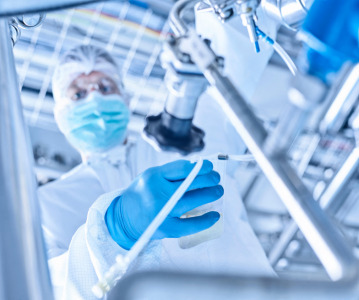
News Understanding the Benefits and Advances of Cleanroom Technology
In an industry where precision and sterility are crucial concerns, cleanrooms play a vital role in maintaining the integrity of pharmaceutical products like drugs, vaccines, and other medical products. So, what is a cleanroom?
-

News AbbVie secures GBP£1.2 billion deal for Gilgamesh’s psychedelic programme
AbbVie has penned a significant agreement to acquire the bretisilocin programme from Gilgamesh Pharmaceuticals for up to £1.2 billion, marking a bold step in the pharmaceutical giant's quest to develop treatments for psychiatric disorders. -

News Gates Foundation commits US$2.5 billion to women’s health research
The Bill & Melinda Gates Foundation has announced a substantial US$2.5 billion commitment to accelerate research and development focused exclusively on women's health through 2030.
-

News Mid-year review: notable FDA drug approvals of 2025
As we fly past the halfway point of 2025, the pharmaceutical landscape reliably continues to evolve with innovative therapies addressing critical medical needs. The FDA has already approved 17 groundbreaking medications this year, each representin... -

News US FDA announces new priority vouchers for accelerated review times
The US FDA announced a new priority program for drug developers – the Commissioner’s National Priority Voucher (CNPV) program aims to enhance the health interests of the US by allowing drug developers to redeem a voucher, shortening th... -
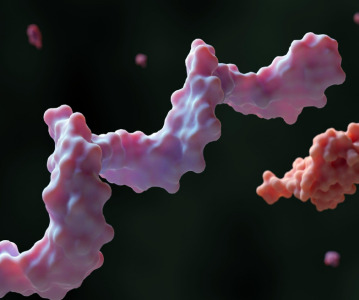
News Google-backed start-up raises US$600 million to support AI drug discovery and design
London-based Isomorphic Labs, an AI-driven drug design and development start-up backed by Google’s AI research lab DeepMind, has raised US$600 million in its first external funding round by Thrive Capital. The funding will provide further power t... -
News AstraZeneca to invest US$2.5 billion in Beijing R&D centre
Amid investigations of former AstraZeneca China head Leon Wang in 2024, AstraZeneca have outlined plans to establish its sixth global strategic R&D centre in China. Their aim is to further advance life sciences in China with major research and manufact...