
Trial to identify breath biomarkers to improve the early detection and diagnosis of cancer
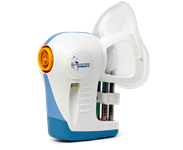
Owlstone Medical and Cancer Research UK initiate pan cancer clinical trial.
Owlstone Medical has initiated the PAN Cancer trial for Early Detection of Cancer in Breath. The large-scale clinical study will evaluate the use of Owlstone Medical’s Breath Biopsy platform for the early detection of multiple cancer types.
The PAN Cancer trial is being conducted in collaboration with a team of leading cancer researchers at the Cancer Research UK (CRUK) Cambridge Centre, the University of Cambridge and Cambridge University Hospitals NHS Foundation Trust. The Chief Investigator is Professor Rebecca Fitzgerald, who is co-lead of the CRUK Cambridge Centre Early Detection Programme, Professor of Cancer Prevention at the MRC Cancer Unit, and an Honorary Consultant in Gastroenterology and General Medicine at Addenbrooke's Hospital, Cambridge.
The PAN Cancer trial aims to develop breath biopsy tests for the early detection of bladder, breast, head and neck, kidney, oesophageal, pancreatic and prostate cancers and brain tumours, with the ultimate aim of detecting cancer much earlier, when better treatment options are available and more lives can be saved.
Professor Rebecca Fitzgerald, the study’s Chief Investigator said: “New tools that can help to diagnose cancer earlier are urgently needed and we are very pleased to collaborate with Owlstone Medical to evaluate Breath Biopsy for early detection. The PAN Cancer trial forms part of our Early Detection Programme, a flagship initiative of the CRUK Cambridge Centre that aims to devise better means of detecting cancer and diagnosing it in the early stages, which can lead to improved outcomes for cancer patients.”
Professor Duncan Jodrell, Director of the Cambridge Cancer Trials Centre (CTCC) and Professor of Cancer Therapeutics at the University of Cambridge, commented: “In pancreatic cancer, for example, only 1% of patients will survive for 10 years - a figure that has changed very little in the last 40 years. New and improved methods for early detection will be crucial to enable us to diagnose and treat pancreatic cancer earlier and help more patients survive.”
Professor Richard Gilbertson, Li Ka Shing Chair of Oncology, Director of the Cancer Research UK Cambridge Centre and Head of the Department of Oncology at the University of Cambridge, said: “By 2030, the number of new cancer cases per year is expected to rise to around 22 million globally. Some cancers are diagnosed very late when there are few treatment options available. Non-invasive detection of cancer in breath could make a real difference to survival. As a Cancer Research UK Major Centre, Cambridge is working hard to realise CRUK’s vision of diagnosing more cancers earlier so that we can work closer to the day when all patients are cured of cancer.”
The trial will use Owlstone Medical’s Breath Biopsy platform, which enables Volatile Organic Compound biomarkers to be captured completely non-invasively in a breath sample, and analysed with high sensitivity and selectivity. Patients with a suspected cancer diagnosis, who are referred to Addenbrooke’s Hospital for clinical assessment as part of the standard NHS cancer care pathway, will be asked to give a breath sample in addition to routine tests.
The breath samples will be collected in clinic using Owlstone Medical’s CE-marked ReCIVA Breath Sampler, before shipping to the world’s first Breath Biopsy clinical laboratory for analysis at Owlstone Medical in Cambridge, UK. The trial will compare the breath samples of patients with, and without, cancer to assess whether reliable biomarkers for early diagnosis of cancer can be identified in breath.
Billy Boyle, co-founder and CEO at Owlstone Medical, commented: “Positive results from the PAN Cancer trial could be game-changing in the fight against cancer: Breath Biopsy tests for cancer detection and diagnosis have the potential to greatly improve survival across a range of cancers. Our Breath Biopsy platform is already being assessed in large scale clinical trials for the non-invasive, early detection of lung and colon cancer, and it will be exciting to see how its use can be extended to other cancer types. Success in this study would make a real difference to the lives of millions of people, and supports our vision of saving 100,000 lives and $1.5 billion in healthcare costs.”
“We are very proud to have the opportunity to work with these world leading research teams on this ground breaking trial, which could have a great impact on improving cancer survival.”
Related News
-

News GSK announces £400 million investment in new Cambridge R&D centre
Pharmaceutical giant to establish flagship research facility on Cambridge Biomedical Campus as part of strategic pipeline acceleration
-

News Understanding the Benefits and Advances of Cleanroom Technology
In an industry where precision and sterility are crucial concerns, cleanrooms play a vital role in maintaining the integrity of pharmaceutical products like drugs, vaccines, and other medical products. So, what is a cleanroom?
-

News AbbVie secures GBP£1.2 billion deal for Gilgamesh’s psychedelic programme
AbbVie has penned a significant agreement to acquire the bretisilocin programme from Gilgamesh Pharmaceuticals for up to £1.2 billion, marking a bold step in the pharmaceutical giant's quest to develop treatments for psychiatric disorders. -

News Gates Foundation commits US$2.5 billion to women’s health research
The Bill & Melinda Gates Foundation has announced a substantial US$2.5 billion commitment to accelerate research and development focused exclusively on women's health through 2030.
-

News Mid-year review: notable FDA drug approvals of 2025
As we fly past the halfway point of 2025, the pharmaceutical landscape reliably continues to evolve with innovative therapies addressing critical medical needs. The FDA has already approved 17 groundbreaking medications this year, each representin... -

News US FDA announces new priority vouchers for accelerated review times
The US FDA announced a new priority program for drug developers – the Commissioner’s National Priority Voucher (CNPV) program aims to enhance the health interests of the US by allowing drug developers to redeem a voucher, shortening th... -

News Google-backed start-up raises US$600 million to support AI drug discovery and design
London-based Isomorphic Labs, an AI-driven drug design and development start-up backed by Google’s AI research lab DeepMind, has raised US$600 million in its first external funding round by Thrive Capital. The funding will provide further power t... -

News AstraZeneca to invest US$2.5 billion in Beijing R&D centre
Amid investigations of former AstraZeneca China head Leon Wang in 2024, AstraZeneca have outlined plans to establish its sixth global strategic R&D centre in China. Their aim is to further advance life sciences in China with major research and manufact...