
US FDA grants priority review for Eisai and Biogen's Alzheimer's drug
Decision by US drug regulator on lecanemab expected by early next year
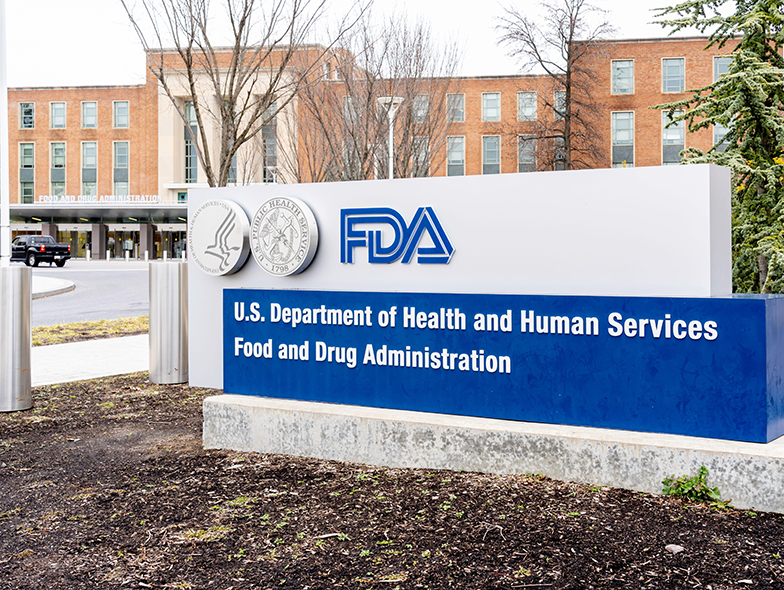
The US Food and Drug Administration (FDA) will fast-track its review of Eisai and Biogen’s investigational Alzheimer's drug lecanemab, with a decision due by January 6, 2023.
Eisai and Biogen announced this week that the US drug regulator had accepted its Biologics License Application under the accelerated approval pathway for lecanemab, an investigational monoclonal antibody for the treatment of mild cognitive impairment caused by Alzheimer's disease.
Like the partners' previous drug Aduhelm, lecanemab is an antibody designed to remove sticky deposits of a protein called amyloid beta from the brains of people with early-stage disease.
The Clarity AD Phase 3 clinical study for lecanemab is ongoing and Eisai completed enrolment in March 2021 with 1,795 patients. The study is designed to show that the drug can slow the rate of cognitive and functional decline by at least 25% and readout of the primary endpoint data will take place later this year. Depending on the trial’s results, Eisai says it plans to submit an application for traditional approval of lecanemab to the FDA before March 31, 2023.
Speaking about the news, Eisai CEO Haruo Naito commented: ‘The acceptance of lecanemab's BLA with priority review is an important milestone in serving people living with Alzheimer’s disease who have been waiting for new treatment options to address an underlying pathology of Alzheimer’s disease. We will continue to actively cooperate with the FDA's review in an effort to bring this new treatment option to people living with Alzheimer’s disease and their families as soon as possible.’
Under the FDA's accelerated pathway, lecanemab needs to show it can effectively interfere with underlying changes that lead to Alzheimer’s dementia, rather than prove any impact on cognition. Such a biomarker would be the level of amyloid proteins in the brain.
This is the same standard the FDA used for approving Aduhelm, the other Alzheimer’s drug produced by the partners which was approved last year. This was met with criticism as only one of two late-stage trials showed it helped slow cognitive decline, and the FDA’s own panel of external experts subsequently advised against its approval.
In December last year, the European Medicines Agency recommended refusing marketing authorisation for Aduhelm. Eisai and Biogen withdrew their application in April 2022.
There is currently no cure for Alzheimer's disease, which is characterised by memory loss, confusion and the inability to care for oneself. However, there are several approved treatments on the market.
Of these, three medications – donepezil (Aricept™), galantamine (Reminyl™) and rivastigmine (Exelon™) – are cholinesterease inhibitors. These medications can prevent the breakdown of a brain chemical called acetylcholine, which can prevent decline in learning and memory in the short-term.
Another medication, called memantine (Ebixa®), is an NMDA receptor antagonist, which is thought to work by affecting the brain chemical glutamate. Glutamate is released in excessive amounts when brain cells are damaged by Alzheimer’s and memantine may protect brain cells by blocking the effects of this excess. It is generally prescribed for people in the middle and late stages of disease.
Eisai serves as the lead of lecanemab development and regulatory submissions globally. Both Eisai and Biogen co-commercialise and co-promote the product, while Eisai retains final decision-making authority.
Related News
-

News Introducing the Pharmaceutical Sustainability Ecosystem from CPHI
The Sustainability Collective from CPHI unveils the groundbreaking Pharmaceutical Sustainability Ecosystem to drive pharmaceutical knowledge sharing, connection, and collaboration in order to change the face of sustainability in pharmceutical... -
News US Government shutdown leads to the FDA grinding to a halt
The US Congress reached a deadlock after not being able to come to an agreement regarding funding, specifically reaching an impasse when Republicans and Democrats were unable to reach an agreement regarding Obamacare subsidies. The resulting shutdown o... -

News Biosimilars for the better: an expert view from Ecolab
Ecolab expert Renato Azevedo shares his insights on the current state of the biosimilars market in pharmaceuticals, after a high number of biosimilar drug approvals throughout the year confirming the shift of focus in this field. -
News US FDA announces new priority vouchers for accelerated review times
The US FDA announced a new priority program for drug developers – the Commissioner’s National Priority Voucher (CNPV) program aims to enhance the health interests of the US by allowing drug developers to redeem a voucher, shortening th... -

News CPHI Podcast Series: US drug policy – exploring the executive orders
The latest episode of the CPHI Podcast Series provides a timely overview of the recent policy changes in the USA, with President Trump signing excecutive orders to change drug pricing under a 'Most Favoured Nation' scheme.
-

News PhRMA trade association issues comments on Section 232 investigation
The Pharmaceutical Research and Manufacturers of America (PhRMA), an American trade association representing groups in the pharmaceutical industry, issued a letter on May 6, 2026 to the Department of Commerce regarding the Section 232 National Security... -

News Pharmaceutical Packaging Market Prospects: Shifting regional policies
The pharmaceutical packaging industry is experiencing significant transformation in 2025, driven by regulatory changes, supply chain challenges, and sustainability initiatives. The US BIOSECURE Act, passed through the House of Representatives in Septem... -
News The next 15 drugs up for negotiation with Medicare include several blockbusters
By now, everyone is quite familiar with the drug price negotiations taking place between drug companies and the Centres for Medicare & Medicaid Services (CMS) in the USA as part of measures being taken to reduce the cost of drugs for patients, to make ...