
Why this company focuses on employee branding to retain top notch talent
In a quest to understand how companies are looking to buck up their talent acquisition game when it comes to R&D, ETHRWorld spoke with Suresh Anubolu, Chief Human Resources Officer at Aragen Life Sciences.
A study on the pharmaceuticals company by Deloitte revealed that 63% of respondents rated Research & Development (R&D) as their top priority. However, the main challenge for them remains lack of skilled talent in an era of swelling resignations.
It goes without saying that the pandemic has accelerated research, marketing, and manufacturing of drugs to prevent this deadly disease, which in turn has eventually created more job opportunities in the field of R&D.
According to a survey by R&D World magazine, about 71% of survey respondents found it difficult to find skilled R&D staff in 2020 compared to 65% in 2019. This trend may be seen in 2022 as well.
Employee branding: An effective strategy for attracting and retaining talent
Suresh Anubolu, Chief Human Resources Officer at Aragen Life Sciences says the fact that the R&D industry is new, unlike the pharmaceutical and healthcare industry, makes employee branding even more important in order to create a differentiation with existing players.
Research by LinkedIn and Talent Solutions showed that 59% of recruiting leaders worldwide are investing more in employee branding. Amid the increasing digitisation and surge in demand for talent, companies are adopting employee branding to attract and retain talent.
But how does one create that differentiation and have a competitive advantage over other industry players?
Anubolu says differentiation comes with the company’s employee value proposition and employee branding.
According to him, a change in demographics while hiring makes talent sourcing and hiring opportunities different.
He said: “Around 20 years back, the age group, the opportunity, sourcing approaches, platforms were very different than today. Employee branding is very important today because offline models are moving into digital models, and establishing the right talent branding and branding approaches are equally important.”
While discussing employee value proposition and its importance in 2022, Anubolu said, “Our employee value proposition is that we invest, we learn and we grow together. Five years back we included the entire workforce while crafting the employee value proposition.”
Due to increased digitisation, Anubolu emphasises strengthening online branding to reach out to talent in various parts of India. He also notes that receiving employee feedback is an important part of employee branding.
“Each stage is important, what experience you are giving,” Anubolu said.
For instance, a unique intervention employed by Aragen Life Sciences centered feedback. Candidates who attended interviews with the company were asked for interview feedback, including recruiter quality. The feedback also comprised the interview quality and reception, including how they were greeted and whether they were made to feel comfortable.
According to Anubolu, all other parameters the company captures are to make necessary corrections to their employee branding.
The impact of pandemic on hiring and workforce
For the R&D departments of pharmaceutical companies, dealing with the pandemic has become even more complicated as working from home is seldom an option for their professionals.
While speaking about the challenges posed by hiring talent during a pandemic, Anubolu says that ensuring employee wellbeing and developing trust around employee safety, especially when employees were coming to the office, was a major factor for employee retention and attraction.
“We ensured that coming to the office is as safe as being at home and we took various interventions, including quarantine centres and a separate Covid policy of 15 days leave. We encouraged a three-shift model,” he said.
When it comes to talent sourcing platforms, Anubolu says that campus placements provided a major talent pool and around 250 employees were hired through that process during the pandemic.
Anubolu also notes the importance of ensuring the wellbeing of the casual workforce, which is spread out across various manufacturing regions for physical support.
He said: “We provided the casual workforce their salaries despite the fact that they were not able to report when the pandemic started. We also let the casual workforce take our buses to come to the office because there was no public transportation and we also gave them health assistance like accessibility to doctors during the pandemic.”
The future outlook for hiring
Explaining the expanding opportunities in different fields for talent acquisition, Anubolu said: “We are looking forward to expanding our team through investing in large molecule manufacturing facilities in the US, as for us growth in an organisation comes through creating new capacities.”
The pandemic is full of uncertain challenges coming up in the workplace and companies need to be prepared with their hiring strategies as the talent market is mutating day by day. Therefore, Anubolu emphasises enhancing gender diversity as a future goal while hiring talent.
Related News
-
Sponsored Content CPHI Online Trend Report: How can flow chemistry help businesses achieve their sustainability goals?
In our latest CPHI Online Trend Report, we partner with Asymchem to understand the innovative potential of flow chemistry for API manufacturing, especially in regards to meeting sustainability goals.
-
.png)
Sponsored Content Ashwagandha and Herbal Medicines: Pharma’s Next Opportunity
Herbal medicines and nutraceuticals have seen a surge in interest since the onset of the COVID-19 pandemic. Driven by patient interest in prioritising personalised and integrative medicines, the herbal ingredients industry is now faced with concerns pe... -

Sponsored Content Discover Our Organic Mineral Salts as APIs
Discover the range of organic mineral salts that serve as Active Pharmaceutical Ingredients available from Dr. Paul Lohmann®.
-
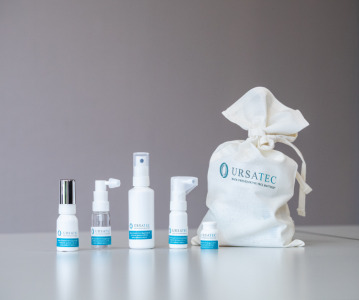
Sponsored Content CPHI Podcast Series: Ursatec – celebrating 30 years of pioneering preservative free
In the latest episode of the CPHI Podcast Series, Digital Editor Lucy Chard spoke with Dominik Rocchi of Ursatec.
-

Sponsored Content How healthcare trends inform dosage forms
Capsules encompass one of the most popular solid oral dosage forms for pharmaceutical products, with the global empty capsule market predicted to rise to USD $3.7 billion by 2026. The growth in the capsule market can be partly attributed to the many op... -

Sponsored Content Pharma Trend Outlook: Pharma 4.0 and Industry Resilience
Download our 2023 Pharma Trends Outlook report to discover the trends set to shape the pharmaceutical landscape in the new year, with expert opinions and insight from across the pharmaceutical value chain.
-

Sponsored Content CPHI Podcast Series: Key Considerations in Selecting the Right CMO Partner
In this month's episode we hear from Jayna Blake, Senior Project Manager for Technical Programs at Baxter BioPharma Solutions, on key considerations for successful CMO selection. -

Sponsored Content Size doesn’t matter: How smaller deals are shaping healthcare M&A
Several mega-deals have made a splash in the pharma and life sciences industries over recent years – from AstraZeneca’s acquisition of Alexion for $39 billion to Gilead Sciences’ $21 billion purchase of Immunomedics. With am...