
Women in Pharma: Manufacturing personal and team success
.png)
Our monthly Women in Pharma series highlights the influential lives and works of impactful women working across the pharmaceutical industry, and how the industry can work towards making the healthcare industry and workplace more equitable and inclusive.
This month, as we celebrate International Women’s Day on March 8, 2025, and highlighting Women’s History Month throughout the month of March, we sat down with Dr Susanne Lemaine, President at Vetter Development Services USA. Heading the company’s clinical manufacturing facility in Chicago, Illinois, Lemaine discusses her career spanning the globe and the pharmaceutical supply chain, and how to work both towards leadership positions and in a leadership capacity itself.
1. Could you please give a brief overview of yourself and your role at Vetter Development Services?
Vetter is a contract development and manufacturing organisation (CDMO) headquartered in South Germany. Our customers are big and small pharma and biotech companies, and our Chicago offices are located at the Illinois Science and Technology Park in north Chicago. Here, we focus on the clinical field, mostly early clinical phases I and II. I started with Vetter in 2006 in Germany, and was responsible for process implementation. When I applied for the position, I had no clue what process implementation was. It is a bit like technical project management, working with the customer on their process. The customer comes with attributes and parameters, and we implement the manufacturing process on the line in production. We are responsible for processing the drug substance all the way up to visual inspection and packaging, and that’s how I started. At the time, Vetter focused on late clinical phase III trials as phase I and II have special requirements regarding losses, flexibility, timelines, and so on. In 2010, Vetter opened a site dedicated to clinical fill, which was exciting for me as it gave me the opportunity to implement clinical products on a new line. I was chosen, with a group of about 15 German nationals, to move to this site, and I was responsible for manufacturing and process development at the start. In 2015, I took over as lead of the site and I have been here since then on what started as a 2-year contract.
2. How did you originally come to work in pharmaceutical manufacturing, and what challenges did you face throughout your career? How have you overcome these challenges?
I studied technical mathematics and have a PhD in computer simulation and biomedical engineering. I worked for several years in research, working on computer simulations for retinal and cochlear implants with electrical stimulation. I was interested in the medical field, but my education wasn’t necessarily chemistry or pharma, so I was excited to work for Vetter, a CDMO that does not have its own pharma products. The daily challenges I navigate are related to the engineering of equipment and the processes – it was a challenge to begin with as I had never seen a lab other than a computer lab before, and I was responsible for implementing processes and working end-to-end with customers who are themselves very knowledgeable. But Vetter has phenomenal teams in place, so while I was responsible for setting up manufacturing processes, I worked with really good production teams who helped me put together documentation and batch records. That is one of the strengths of Vetter – good teamwork and the company’s high expertise has really helped me settle here.
3. What is the importance of collaboration in your line of work?
Collaboration is, in many ways, very important in our line of business. We are 4500 miles and seven time zones away, but collaboration is critical so that we have the same processes and quality for all of our customers. My team is around 110 people out of the 7000 that work across Vetter globally, so we are a relatively small team. We work very closely together also with the teams in Germany. I enjoy this a lot and think it is very fruitful – combining a lot of experience and expertise with very good planning ahead. I think this is a very good combination to bring forward innovation.
Collaboration with our customers is also very important, and while we use the term ‘customer’, it is really a partnership, especially in early clinical phases. The customer develops a drug product, and we develop a manufacturing process together with them. We have a strategic and open partnership with our customers, so we learn with every new customer, and they profit from our vast experience. In this industry, because it’s so highly regulated, it is important to always network and learn from one another. It’s also valuable to talk with experts to interpret and implement evolving guidance and regulations.
4. How can the pharmaceutical manufacturing sector invest in its employees to support career longevity?
The first thing that comes to mind is continuing education. This does not have to be going back to college – learning can be through collaboration, networking, and working together with experts. Technology changes quickly, and we need to be on top of it. We prioritise advanced education, and support employees in everything remotely related to pharma. Sometimes, you even help develop the careers of employees outside of the company but because they contribute their expertise and time, it adds value internally. I think this commitment also contributes to retention of top talent.
We also have an apprenticeship program for manufacturing employees, which is a good training opportunity and helps us to promote from within. Vetter views an employee from the big picture – we have employees here who have worked in several different departments and are all valuable to the company. In our Chicago offices, 21 out of our 110 employees have been here for more than 10 years, so our retention rate is indicative of our support of employees.
5. What advice do you have for future Women Leaders in Pharma?
I think this is advice that can be said for all industries, but it is to be forward-thinking. The world and its technologies are changing so quickly but in pharma, with all our regulations, developing a new product that doesn’t work can be life-threatening. Development times can be extremely long. In this industry, you need to anticipate what will be the case in, say, 20 years, so you can take a calculated risk. When you’re in a leadership position, you’ll have to make decisions that nobody can be sure is the right one. However, making the decision and working to make that choice happen is critical, which includes leading your team in the direction that you believe is best. Using this as a guiding principle and remembering that we are doing this to make patient lives better will help you find your way.
Have a story to share about diversity, equity, and inclusion in pharma? Contact [email protected] to learn how you can contribute to our Women in Pharma series.
Related News
-

News Swiss pharma industry warns US tariffs could harm global patient care
The Swiss pharmaceutical sector has raised alarms over new US tariffs on medicines, warning of disrupted supply chains, increased costs, and delayed innovation, all of which could jeopardise patient access to essential treatments worldwide.
-
News Women in Pharma: CPHI India – India’s Pharmaceutical Industry and Gender Inclusion Challenges
India’s pharmaceutical industry has emerged as a significant player in the global market, valued at USD 50 billion in FY 2023-2024, according to Frost & Sullivan’s analysis. This sector encompasses a diverse portfolio, including drugs, vacc... -
News Biogen acquires Apellis Pharmaceuticals to boost immunology and rare disease profile
Biogen Inc. has announced its acquisition of Apellis Pharmaceuticals, Inc., a move that is set to significantly enhance its growth portfolio in immunology and rare diseases. The agreement, valued at approximately US$5.6 billion, will see Biogen purchas... -

News Gilead Sciences acquires Ouro Medicines for over US$2 billion
Gilead Sciences confirms a deal to take over Ouro Medicines, adding to a portfolio of therapies for autoimmune diseases.
-
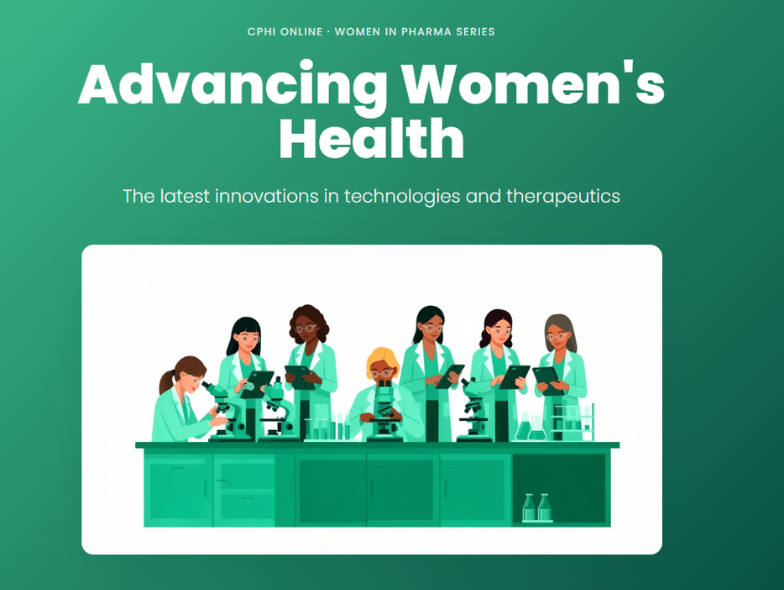
News Women in Pharma: Advancing Women's Health
Discover the latest innovations in technologies and therapeutics that are revolutionising women's health in our latest CPHI Online Women in Pharma infographic.
-

News CPHI Pharma Awards 2026: Recognising Excellence in an Evolving Industry
Submissions now open — deadline May 16
-
News Dr Reddy's to launch generic semaglutide in India
Dr Reddy’s Laboratories, one of India’s leading pharmaceutical companies, is preparing to launch a generic version of semaglutide, branded as Obeda, in March. Obeda is expected to provide a more affordable alternative to Ozempic a... -
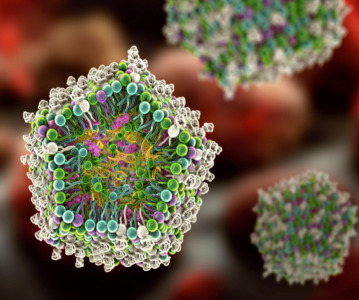
News Frontier Biotech and GSK Forge RNA Therapy Partnership
Frontier Biotechnologies and GSK have entered a global licensing agreement to advance small interfering RNA (siRNA) therapeutics. This collaboration grants GSK exclusive rights to develop and commercialise two promising siRNA candidates, marking a mile...