
Bioconjugation expertise and increased productivity in bio over next 5 years
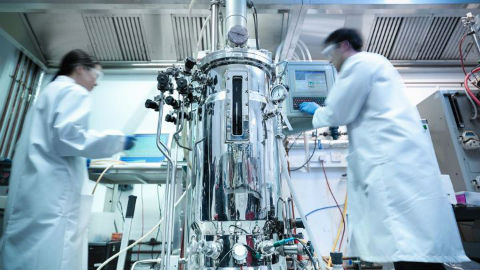
Smaller bioreactors and high-density perfusion techniques needed as manufacturing makes significant efficiency improvements.
Ahead of the inaugural edition of bioLIVE – the bioprocessing and manufacturing event opening October (9-11) in Madrid – CPHI Worldwide announces the bio findings of its annual report, which foresees much greater efficiency in biomanufacturing and an increased exchange of ideas across small and large molecule industries.
CPHI Annual report expert, Mike Ultee of Ulteemit BioConsulting projects great strides being made in improving bioprocessing techniques and, in particular, cell line productivity for recombinant proteins. He predicts that over the next 5 years productivity of fusion proteins and enzymes will move towards the 2-5 g/L range. The consequence of which is that we are likely to see continued moves towards smaller bioreactors.
Ultee also argues that the rise in the use of continuous bioprocessing will see the return of perfusion bioreactors aided by inline new filtration technologies – ultrafiltration, diafiltration and concentration equipment. In fact, high-efficiency perfusion techniques will also enable extremely high densities (~ 108 cells/mL) in small volumes. Most excitingly, the pipeline of CAR-T and gene therapies will now come to market in increasing numbers as bioprocessing techniques have proved reliable in bringing products through clinical and commercial production.
“In 5 years' time we will have been through a golden period, with game-changing improvements made in upstream, downstream and continuous bioprocessing. The market will by then also boast much greater numbers of biosimilars and new applications for cell and gene therapies. The industry is collectively maturing extremely quickly from Big Pharma and biosimilars to CDMOs,” added Ultee.
Kent Payne, CEO of Socorro Pharmaceuticals LLC explores in his analysis how demand is now outstripping supply for qualified bio professionals in the big bio hubs – notably Boston and San Francisco – and increasingly we will see small molecule professionals moving across, especially in areas like conjugation and ADCs where there is directly transferable expertise.
However, his conclusion was that as biomanufacturing enters its maturation stage, especially amongst the smaller nimble biotechs, they will increasingly look borrow from practices already established in the small molecule segment rather than by ‘any means to market’.
“There are lessons to be learned from Pharma peers to drive enhanced productivity and quality, whilst simultaneously lowering costs. The processes and skills that have been honed at larger companies to drive operational excellence are key to the smaller companies’ growth and profitability prospects. As small companies reach a tipping point in their life cycle, they must move beyond the ‘just get it done by any means’ mode to a ‘growth by design’ mode in order to be prepared for commercialization and beyond,” commented Payne.
In particular, it is in the supply chain and management systems where there are likely to be great efficiencies yet to be discovered. Payne concluded: “over the last decade or so, many of the larger biomanufacturing players have implemented more sophisticated production management systems to provide real monitoring and optimization. Nevertheless, compared with small molecule counterparts, there is still much room for improvement.”
Rutger Oudejans, Brand Director at UBM for bioLIVE said: “The findings in our Annual Report clearly support the need for introducing an event like bioLIVE – one that supports the benefits of the growing exchange of ideas across small molecule and biomanufacturing. What is most exciting is that in an age of renewed innovation and with drug attrition rates falling that we might also be able to bring these new biologics to market much cheaper. It’s one of the central themes of this year’s inaugural event, ‘how to help transition the growing workforce needed in bio’ and, of course, ‘how we can make manufacturing more efficient and bring medicine to patients faster’. The synergies we are seeing with small and large molecule in the long-term will help both industries innovate and commercialize better in the future.”
Related News
-
News Novartis signs US$3.2 bn subcutaneous delivery deal with Alteogen
Swiss pharma giant secures access to Korean biotech's ALT-B4 hyaluronidase platform in milestone-heavy agreement, marking Alteogen's fourth major licensing deal of 2026 as competition intensifies in the subcutaneous drug delivery space.
-

News Women in Pharma: The philosophy of pharmaceutical leadership
In this latest instalment of our Women in Pharma series, we sit down with Clarissa Sowemimo-Coker, Chief Strategy Officer at Ambrose Healthcare and CPHI Middle East Advisory Board Member.
-

News The PSCI Supplier Partnership - Collaboration for Responsible Supply Chains
About the Pharmaceutical Supply Chain Initiative The Pharmaceutical Supply Chain Initiative (PSCI) is the leading, member-led association for pharmaceutical companies working collaboratively to build responsible supply chains. Founded in 2006 and es... -

News AstraZeneca shares plunge 8.9% after reports of BMS talks
Britain's largest drugmaker lost more than GBP£17 billion in market value following reports of preliminary merger discussions with Bristol Myers Squibb that could create a pharmaceutical giant worth nearly US$400 billion, though investors rem... -

News GSK announces £400 million investment in new Cambridge R&D centre
Pharmaceutical giant to establish flagship research facility on Cambridge Biomedical Campus as part of strategic pipeline acceleration
-

News The CPHI Sustainability Summit - Where Conversation Becomes Collaboration
The Report Was Never the Destination - “The future of pharmaceutical sustainability won’t be shaped by individual organisations working in isolation. It will be shaped by partnerships, shared expertise and the willingness to work diffe... -

News Trump's generic drug tariffs set to reshape global pharmaceutical supply chains
The US president has announced plans to impose tariffs of up to 200% on imported generic medicines from August 2028, giving manufacturers a two-year window to establish domestic production facilities. The move threatens to upend a global supply chain t... -
News Building Safer, More Responsible Pharmaceutical Supply Chains: PSCI Global Audit Insights
The Pharmaceutical Supply Chain Initiative (PSCI) has released its seventh annual Audit Findings Analysis Report, offering unprecedented insights into supplier practices across the global pharmaceutical and healthcare industry.With a record-breaking 24...