
Biosimilars as market drivers for autoinjector technology
Charbel Tengroth, Managing Director, Tengroth Consulting
Pre-filled syringes and injection devices are increasingly used for administration of injectable drugs in a home setting, saving the patients a visit to a doctor or nurse to get their dose of medication. The new, innovative treatments are generally very expensive which has somewhat limited the use of these new therapies and devices to select markets. The introduction of biosimilars, which are the equivalent of generic small-molecule drugs, has the potential of making these drugs and therapies available to new markets and wider shares of the population in existing markets.
This study looks at the biosimilars approved to date, and in particular those supplied in a pre-filled syringe or autoinjector in order to draw conclusions about the availability of biosimilars in these relatively costly presentations, what therapy areas appear to favor autoinjectors, and how device-equipped products seem to fare in the market.
Biosimilars
According to the FDA: ”a biosimilar is a biological product that is highly similar to and has no clinically meaningful differences from an existing FDA-approved reference product.”
The EMA defines a biosimilar as: “a biological medicine highly similar to another already approved biological medicine (the 'reference medicine').”
The meaning of highly similar is of central importance to the definition of biosimilars since contrary to small molecules the “generic” molecule is generally not identical to the reference medicine. The EMA defines highly similar as in terms of molecular structure, biological activity and efficacy, safety and immunogenicity profile.
The EMA has approved 58 biosimilars for use in Europe, while the FDA has approved 28 biosimilar products. Biosimilars have been approved in the following product classes: insulin, human growth hormone, follicle-stimulating hormone, granulocyte colony-stimulating factor, parathyroide hormone, tumor necrosis factor (TNF) inhibitor, erythropoiesis stimulating agent, and monoclonal antibodies. In the table below are the reference products and the number of approved biosimilars for each, ranked in descending order.
Devices
A subset of the biosimilars listed above are delivered in pre-filled syringes or autoinjectors, thus facilitating self-injection. A pre-filled syringe is a small, simple, low-cost device. Having to self-inject can be jaunting, especially with an exposed needle. There is always a risk of needle stick injuries, even though syringes can be equipped with needle safety devices to mitigate this risk.
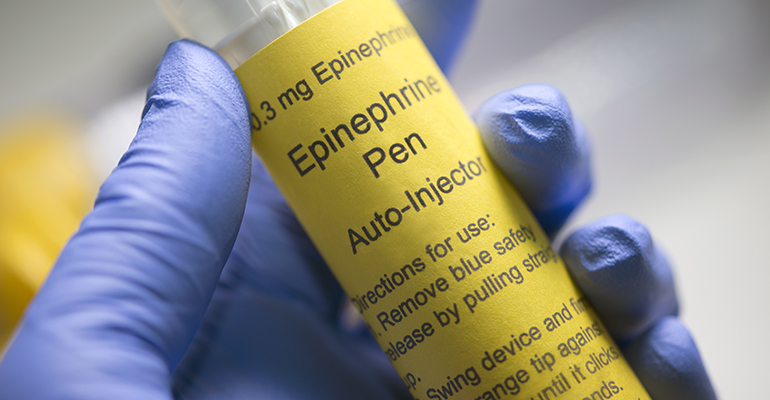
An autoinjector offers more functionality and increased safety compared with a syringe but is a costly product and takes up more space, which can be an issue when considering space for cold storage in a home environment. There are several companies developing and offering autoinjector technologies for pharmaceutical products, however for on market biosimilar products only three companies have managed to commercialize their technologies; SHL Medical, Ypsomed, and Becton&Dickinson (BD). These autoinjectors all use a 1 mL long glass syringe with a staked on needle for primary packaging of the drug. They differ slightly in functionality between needle shield or button activation, also known as two step or three step activation (the steps being 1. Remove cap, 2. Press needle shield against the injection site, and 3. Press button). They can also offer automatic or manual needle penetration, and different ways of indicating start and end of injection.
There is a significant cost associated with bringing a drug-device combination product to the market. Part of that is the cost of the device used, obviously, although a likely much larger cost is the need to establish and maintain a design history file for the device and associated quality management system. Also, it can add time and activities to the abbreviated development timeline of a biosimilar, as well as development risk, all which must be considered when establishing the development and commercialization strategy of the product.
Biosimilars in pre-filled syringes
There are about 20 biosimilars available in pre-filled syringes (PFS). Filgrastim/pegfilgrastim is the most common biosimilar product in PFS, followed by epoetin alfa. In addition to those there are two heparin-like products and one monoclonal antibody (adalimumab). Some products registered for use in autoinjectors are also listed as available in PFS, but it is difficult to assess the prescription ratio between different presentations.
These products are typically administered by healthcare providers or by the patients, after receiving instructions and training on how to inject themselves. The treatments or therapies are transient in nature, aiming to cure a disease or avoid complications. The syringes are often equipped with a needle safety device, either an active or a passive needle shielding mechanism. Active safety devices require the user to take some action after injection to make the needle safe, while passive devices will shield the needle automatically after injection.
Biosimilars in autoinjectors
There are eight biosimilars currently available in an autoinjector configuration. Adalimumab has six and etanercept two. The two reference products, Humira and Enbrel, are both available in autoinjectors. These eight products use six different autoinjector designs, making it clear that the autoinjector is part of the branding or at least a way to differentiate the product from its competitors. Novartis/Sandoz is a good example of the former since they are using their Sensoready autoinjector for both their innovative (patented) biological drugs, and their two biosimilars Hefiya/Halimatoz and Erelzi. Amgen has also adopted this approach for their drugs and biosimilars by using the same SureClick technology for their Amgevita as they have for Enbrel and Repatha.
It makes a lot of sense to re-use device technology across a portfolio of biological drugs, regardless of them being innovative drugs or biosimilars. If the technology can be adapted to the drug viscosity and the required injection volume re-using the technology will accelerate the development time and lower the risk of device issues delaying product launch or impeding supply. It also means that companies with autoinjector products already on the market have an advantage in developing additional biological drug in devices, especially so for biosimilars due to the abbreviated clinical program needed for approval.
Outlook and conclusions
Based on the information gathered from the two products for which there are biosimilars in autoinjectors available today, biosimilars can be a market driver for autoinjector technology. As more biologic drugs come off patent, we should also expect to see biosimilars be developed for use in autoinjectors for those cases where the reference product has a device presentation. In addition to autoimmune diseases (RA), therapies to manage Multiple Sclerosis (MS) use autoinjector technologies. Following the example given here for adalimumab and etanercept products we should expect the biosimilars to use a range of different injectors and device technologies, in part to differentiate the product from its competitors. There is also a great deal of activity around bringing connectivity and added functions to the devices, focusing especially on drug therapy compliance. While such innovations are still largely in prototype and proof of concept stages, it is expected there will be such systems available in the next few years, which will add another layer to the differentiation of products within one biosimilar segment. However, based on the investments needed to bring any device product to market our expectation is that this will most likely be driven by innovator product launches, on which possible biosimilars will eventually “piggy-back”.
There is great commercial potential in the biosimilars market. Samsung Bioepis have launched three products; Benepali, Imraldi, and Fixabi that generated sales in the EU of more than $738 million in 2019. The two first products are used with autoinjectors and are also generating the most sales.
In the short term, up to five years from now, we expect biosimilars to launch at an accelerating pace, and to see 2-3 new biosimilars in autoinjectors approved per year. More importantly, biosimilar launches in new markets such as China or India will drive up volumes and likely put more pressure on the cost of the drugs. The question remains if this evolution will follow the trends seen especially in the EU towards self-administration of drugs, including injectable drugs and the use of devices, or something else. It could be either a low cost alternative such as a vial, or an increased use of PFS presentations also for those cases where the reference product is in an autoinjector configuration.
The biosimilars will be using the conventional technology already available today, mostly due to the development time and risk associated with novel injector device technology. In the longer term, as innovator products are launched in devices that offer additional functions around tracking device use and patient health, we may see biosimilars adopting also these functions.
Related News
-
News Swiss pharma industry warns US tariffs could harm global patient care
The Swiss pharmaceutical sector has raised alarms over new US tariffs on medicines, warning of disrupted supply chains, increased costs, and delayed innovation, all of which could jeopardise patient access to essential treatments worldwide.
-

News Women in Pharma: CPHI India – India’s Pharmaceutical Industry and Gender Inclusion Challenges
India’s pharmaceutical industry has emerged as a significant player in the global market, valued at USD 50 billion in FY 2023-2024, according to Frost & Sullivan’s analysis. This sector encompasses a diverse portfolio, including drugs, vacc... -
News Biogen acquires Apellis Pharmaceuticals to boost immunology and rare disease profile
Biogen Inc. has announced its acquisition of Apellis Pharmaceuticals, Inc., a move that is set to significantly enhance its growth portfolio in immunology and rare diseases. The agreement, valued at approximately US$5.6 billion, will see Biogen purchas... -
News Gilead Sciences acquires Ouro Medicines for over US$2 billion
Gilead Sciences confirms a deal to take over Ouro Medicines, adding to a portfolio of therapies for autoimmune diseases.
-
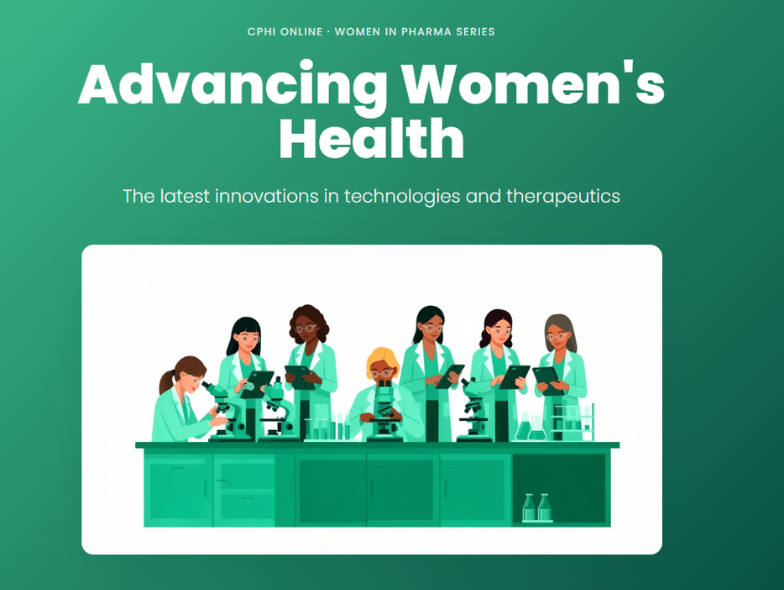
News Women in Pharma: Advancing Women's Health
Discover the latest innovations in technologies and therapeutics that are revolutionising women's health in our latest CPHI Online Women in Pharma infographic.
-

News CPHI Pharma Awards 2026: Recognising Excellence in an Evolving Industry
Submissions now open — deadline May 16
-
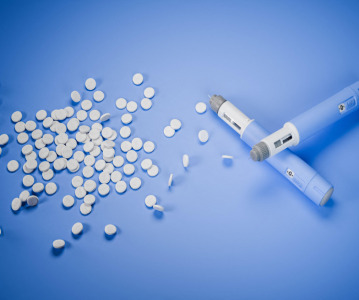
News Dr Reddy's to launch generic semaglutide in India
Dr Reddy’s Laboratories, one of India’s leading pharmaceutical companies, is preparing to launch a generic version of semaglutide, branded as Obeda, in March. Obeda is expected to provide a more affordable alternative to Ozempic a... -
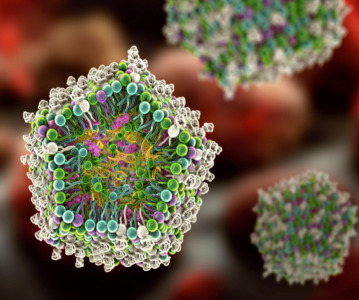
News Frontier Biotech and GSK Forge RNA Therapy Partnership
Frontier Biotechnologies and GSK have entered a global licensing agreement to advance small interfering RNA (siRNA) therapeutics. This collaboration grants GSK exclusive rights to develop and commercialise two promising siRNA candidates, marking a mile...