
Jetting emerges as greener, more efficient alternative in resin manufacturing
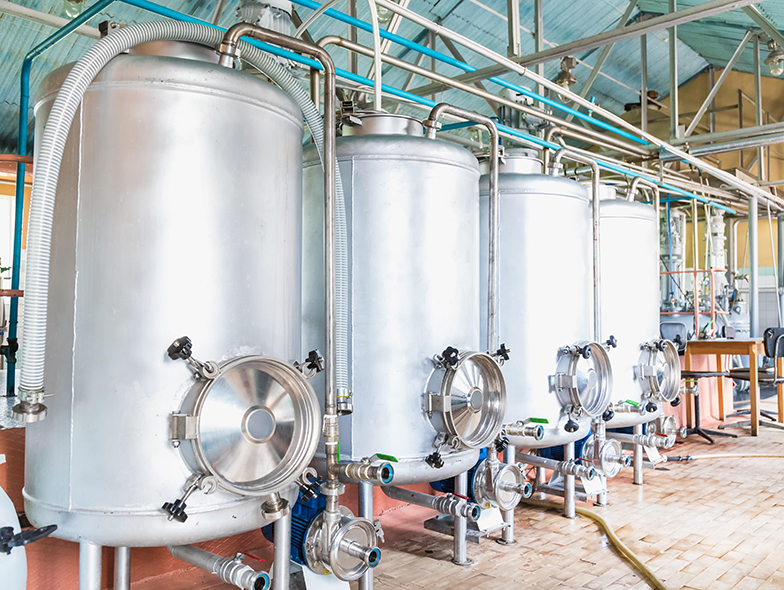
Purolite discusses its decision to switch from batch emulsification to Jetting technology
The life sciences industry has witnessed significant change in the last few years, most notably during the COVID-19 pandemic. Global lockdowns forced companies to accelerate digitisation, expand access to remote healthcare solutions and, most importantly, shorten the timeline for the development of life-saving vaccines.
However, not all areas have experienced such rapid advancement. Change has been slow to take hold in manufacturing, with many companies taking an ‘if it ain’t broke, don’t fix it’ approach. The cost of overhauling manufacturing processes and potential requirements around regulatory reapproval are also known barriers.
Nonetheless, innovation in manufacturing technology is occurring in some areas. Purolite, a leading manufacturer of resins used in the bioprocessing industry, serves as a prime example.
CPHI sat down with Fred Ghanem, Purolite’s Business Development Director, during CPHI North America to discuss the company’s shift to Jetting technology and how this relates to future expansion plans.
According to Ghanem, Purolite originally introduced Jetting due to the promise of improved efficiency and capacity. Purolite describes this technology as ‘a patented, industry-changing method that produces agarose beads with a very narrow particle size distribution.’ This means the company can manufacture exact particle sizes, which has unique performance benefits in chromatography processes.
Historically, most agarose resins have been produced using a process called batch emulsification. Batch emulsification produces wide particle size distributions, even after extensive sieving, making column packing reproducibility more challenging and reducing both pressure flow and resolution. From a manufacturing perspective, it is also time-consuming, labour-intensive, and more environmentally harmful.
Jetting provides an environmentally friendly alternative as it produces less solid waste and requires significantly lower volumes of water and solvents.
‘Because you're making the product to the exact particle size that you need, you no longer have to screen and throw away about 40% of your batch,’ Ghanem said, referencing the fact that batch emulsification produces yields as low as 35%.
‘We decided that rather than having the Jetted product as just an improved product line, we would use Jetting for all of our Praesto resins.’
Ghanem noted that while Jetting is common in the food and water treatment industries, its applications in pharmaceuticals have been limited.
‘The pharmaceutical industry has been slow to adapt,’ he said. ‘But at Purolite we've taken it upon ourselves to try to raise the profile of this technology, because that is the future.’
In late 2020, the company announced plans to construct a new 74,000 square foot facility near the company’s headquarters in King of Prussia, Pennsylvania. The new facility will include two new cleanrooms to manufacture APIs and excipients, as well as an agarose manufacturing facility equipped with Jetting technology for the capture and purification of (mAbs) monoclonal antibodies sold under the Praesto® brand.
According to Ghanem, the building is scheduled for completion very soon. On average, it takes 6-12 months to install such a facility when the building is already in place, compared to three years for a batch emulsification facility. Ghanem says this level of agility supports the company’s goal of having multiple manufacturing facilities spread across the world.
Purolite was acquired by Ecolab last year in a deal worth $3.7 billion. Ghanem says this has placed the company on a ‘fast track’ and increased access to new investments. With the completion of its King of Prussia facility, it will be the only supplier with the capabilities to produce bioprocess agarose resins across two independent continents.
Related News
-

News Swiss pharma industry warns US tariffs could harm global patient care
The Swiss pharmaceutical sector has raised alarms over new US tariffs on medicines, warning of disrupted supply chains, increased costs, and delayed innovation, all of which could jeopardise patient access to essential treatments worldwide.
-
News Biogen acquires Apellis Pharmaceuticals to boost immunology and rare disease profile
Biogen Inc. has announced its acquisition of Apellis Pharmaceuticals, Inc., a move that is set to significantly enhance its growth portfolio in immunology and rare diseases. The agreement, valued at approximately US$5.6 billion, will see Biogen purchas... -

News Eli Lilly confirms Pennsylvania for US$3.5bn manufacturing site
The company plans to create more than 2,800 manufacturing and construction jobs at Lilly's 10th US manufacturing site announced since 2020.
-

News Drug Approvals from 2025 – Triumphs in the midst of challenges
The following infographic outlines key drugs that have been newly approved by the US FDA in 2025. -

News Johnson & Johnson completes acquisition of Halda Therapeutics
Acquisition brings an advanced, highly differentiated treatment for prostate cancer, strengthening Johnson & Johnson’s longstanding commitment to innovation in the disease. Lead asset demonstrates potential to overcome key resistance pathways ... -
News AI-powered therapy offers hope for rare familial polyposis
Recursion Pharmaceuticals has announced promising results from its ongoing early- to mid-stage trial evaluating its AI-powered treatment, REC-4881, for familial adenomatous polyposis (FAP).
-
News CPHI Podcast Series: From Patents to Public Health: The GLP-1 Journey
The latest episode of the CPHI Podcast Series delves into the future of obesity management globally, offering opinins on might happen after patent expirys and new globals players entering the fray.
-

News From Pharma to Table? Direct-to-consumer pharma sales and price cuts ramp up in US
The pharmaceutical industry is witnessing a seismic shift as major companies embrace direct-to-consumer sales models and announce significant price reductions across the United States, responding to mounting pressure from the Trump administration to ta...