
Insights from ISPE Europe Annual Conference 2025 with Schneider Electric
.png)
CPHI Online attended the ISPE Europe Annual Conference 2025, held May 12-14, 2025, in London, UK at the Novotel West London. Throughout 3 days of discussions and collaboration, we spoke to various experts across the life sciences and pharmaceutical engineering community to discuss highlights and key learnings from this year’s conference.
Below, we catch-up with Vicki Pearson, Life Science Strategy Lead at Schneider Electric, to discuss her key takeaways from the conference, and what the future holds for the life sciences and pharmaceutical industries in terms of AI and automation, Pharma 4.0, and sustainability.
1. What have been some of your highlights from this year’s ISPE Europe Annual Conference?
ISPE Europe felt significantly busier this year, with a noticeable increase in attendees. It's clear that the industry is placing a stronger emphasis on sustainability as a key business driver, alongside quality and production.
We showcased the AVEVA Unified Operations Centre for the life sciences industry, integrating operations technology (OT), information technology (IT), and engineering technology (ET). We demonstrated how digital technologies can truly empower the industry by placing data at the core of all operations. We also highlighted how a holistic enterprise visualisation can be achieved through solutions such as end-to-end digital twin technology, and how enhanced systems interoperability can drive improved business performance.
2. What key takeaways did you glean from this year?
The industry is facing several challenges, including varying economic conditions, the pressure to improve healthcare accessibility for all, and the trend toward reshoring. A number of proposed EU legislations – such as the EU pharmaceutical legislation reform aim to make medicines more environmentally friendly – include potential bans on substances like universal PFAS (Per- and Polyfluoroalkyl Substances) and titanium dioxide, introducing both complexity and urgency.
In response, the industry is exploring more collaborative approaches to transform these legislative changes into strategic opportunities. This is where Schneider Electric aims to support the life sciences sector – helping it shift from mere regulatory compliance to competitive adaptation. We do this by delivering open, software-defined automation solutions that integrate operations technology (OT), information technology (IT), and engineering technology (ET).
3. How are current AI technologies being implemented in pharmaceutical manufacturing, and what benefits or challenges do you see for the future of Industrial AI?
Among all innovations, artificial intelligence (AI) is expected to have the greatest impact, ranging from workforce empowerment to drug discovery, where it is already being actively applied. In the production space, AI at the edge layer leverages customer data to enhance product quality and team collaboration. However, despite its advantages, the industry continues to face challenges in scaling beyond pilot projects.
I see this as the biggest hurdle: building AI that scales by leveraging existing infrastructure and data. Getting the setup right from the start is critical – and this is where Schneider Electric can help transform traditional architectures into AI-ready, IT/OT-integrated systems.
Interestingly, the Pharma 4.0 survey[1] presented at ISPE Europe this year indicates increasing levels of industry maturity. Yet, 40% of organisations have either not started or are just beginning their Pharma 4.0 journey.
Our own industrial AI solutions are built on open, software-defined automation (SDA), which accelerates AI adoption by unlocking data flows, orchestrating industrial systems, enhancing cybersecurity, and breaking down barriers to competitive, efficient, and cost-effective operations – ultimately enabling asset- and human-centric industries.
4. Sustainability is a core focus for the pharmaceutical industry – what areas of pharma manufacturing and engineering are seeing the greatest shifts to become more sustainable?
I believe we're witnessing a shift in green chemistry, packaging solutions, and the use of single-use plastics, particularly in the context of circularity. This is becoming a highly engaging topic for the industry. We're also seeing a growing emphasis on sustainability engineering – focusing on what's being done within production processes and facility infrastructure. A more holistic approach to sustainability is beginning to emerge, where it is becoming truly integrated into broader engineering practices.
5. How are companies like Schneider Electric balancing the demands for patient safety, high-quality drug production, sustainable considerations, and stakeholder goals and profits?
Schneider Electric helps customers put sustainability at the heart of manufacturing excellence. We are uniquely positioned to provide a triangulation between automation, energy management, and sustainability. We lead by example, leveraging our deep domain expertise – Schneider Electric now has four World Economic Forum (WEF) Sustainability Lighthouses, the most held by any company. We foster partnerships and deliver Industrial Digital Transformation Services (IDTS) – helping customers reshape industrial operations, enabling efficiency, more sustainable and resilient operations, and empowering the workforce.
[1] A global survey based on 260 respondents including service providers, end users (biotech manufacturing), regulatory and non-users.
Related News
-

News A Day in the Life of a CPHI Attendee
The series aims to highlight some of the indispensable talent involved in all aspects of the pharma value chain, getting to know the people working towards better healthcare across the world. This special edition aims to get to know the people attendin... -

News CPHI Pharma Awards 2026: Recognising Excellence in an Evolving Industry
Submissions now open — deadline May 16
-
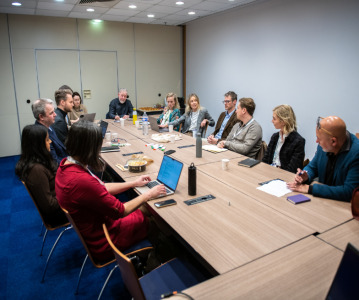
News Packaging Under Pressure: Where Sustainability in Pharma Meets Reality
A Reflection on the Sustainability Collective Roundtable Session at Pharmapack 2026
-
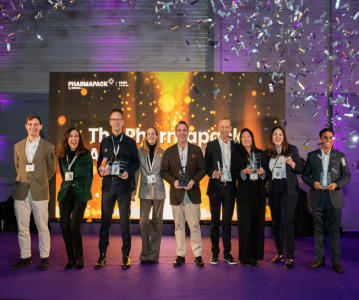
News Where Pharma Innovation Takes the Spotlight: Pharmapack Awards 2026
The 2026 Pharmapack Awards, held January 21, 2026, celebrated and recognised leading companies in the pharmaceutical packaging sector paving the way for packaging and drug delivery excellence in the future.
-
News Pharmapack 2026 - From the Floor
Celebrating its 25th anniversary in the city where it all started, Pharmapack 2026 is back in Paris! From January 21-22, 2026, Paris Expo Porte de Versailles opens its doors again to the pharmaceutical packaging and drug delivery sectors, ready for 2 d... -
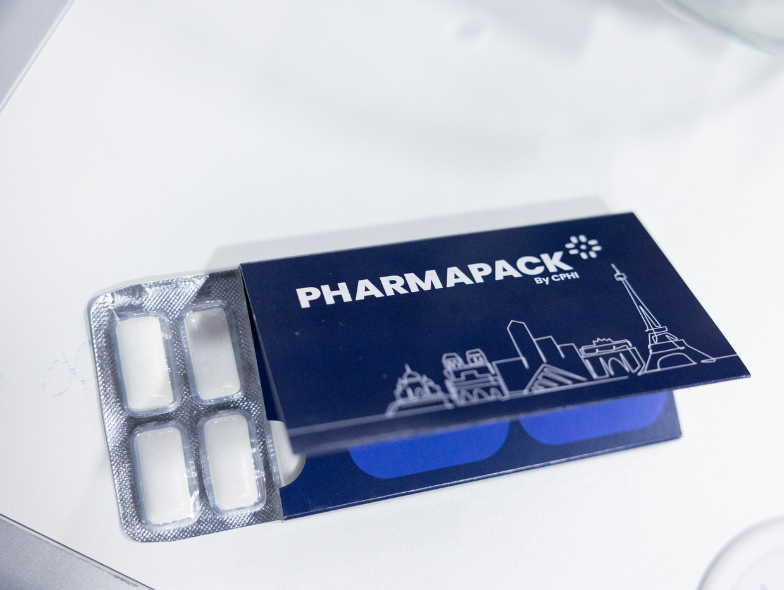
News Reshaping Pharmaceutical Packaging’s Sustainable Future at Pharmapack 2026
Pharmapack 2026 returns as the pharmaceutical packaging industry's premier gathering, bringing together global leaders, innovators, and decision-makers for an unparalleled showcase of cutting-edge solutions and strategic insights.
-
News CPHI Frankfurt 2025 – From the Floor
In a full-circle moment, our From the Floor blog returns to Frankfurt for the 2025 edition of CPHI Frankfurt. Taking place over 3 days from 28–30 October, we're excited to be back in a city of global innovation to meet, collaborate, and grow ... -
News Pharma in Focus: Key Findings from the CPHI community
Explore what the CPHI community has to say about the top trends emerging from the pharmaceutical industry and supply chain with our annual Strategic Insights infographic.