
Streamlined Development for Efficient Production of Bispecific Molecules: Connect to Frankfurt on-demand
.png)
In this Connect to Frankfurt session, Séverine Fagète, VP, Cell Line Development Services at Selexis (Geneva, Switzerland), and Brandon Brino (Durham, USA), Process Development Scientist and Group Leader at KBI Biopharma, present an overview of a streamlined process for the production of bispecific molecules.
As part of our conference track on Manufacturing Excellence, discover the all-encompassing, integrated platforms for an efficient bispecific molecule production method, from cell line development and tox screenings through to cGMP manufacturing, generating high quality clinical bulk drug substances under accelerated timelines.
The session introduces the combined, integrated processes of Selexis and KBI Biopharma for end-to-end cell line development and manufacturing solutions, with integrated programs achieving final process titers for monoclonal antibody (mAb) and non-mAb molecules. Fagète and Brino offer a Selexis–KBI integrated program using a fed-batch bioreactor process, with cell development for bispecific molecules with Selexis leading to manufacturing with KBI Biopharma.
Challenges associated with bispecific molecule formats
Fagète presents several key challenges for developers when it comes to cell line development for bispecific molecules stemming from the diversity of scaffolds expressed. These range from intact IgGs, Ig domain bispecifics, alternative scaffolds, and Fc fusions. Other proteins secreted of different natures, such as blood factors, viral proteins and ion channels, can also be utilised. With this range, there follow several major expression challenges with bispecific formats. Design challenges result from the increased complexity of asymmetrical and symmetrical linkers. Purification requirements for removing homodimers of bispecific molecules add further considerations. With cell line development, Fagète states that there has been a push to produce bispecific antibodies in a single-cell system, adapting existing processes that rely on separate steps or cell line cultures.
In the early stages of cell line development, Fagète emphasizes the need to screen bispecifics for better predictability and selection of bispecific candidates to overcome the above challenges. She lists several key attributes for quality bispecifics. These include optimal chain-to-chain ratios achieved with codon optimisation with the ability to modify and finetune the ratio. A 96 deepwell evaluation by feedbatch that tests up to 96 candidates can eliminate unresponsive candidates to agitation and select clones responsive to feed. Such integrated platforms, Fagète states, will ensure streamlined bispecific molecule selection before advancing to the manufacturing stages.
Cell culture process development
Building off from Fagète’s discussion on cell line development for bispecific molecules, from Fagète’s discussion on cell line development for bispecific molecules, Brino extends the conversation to focus on a project workflow for the manufacturing of bispecifics. In a simplified, linear workflow, he highlights the key steps as follows: Material supply and optimisation using an early single-cell candidate pool (introduced by Fagète in her presentation), clone selection, process optimisation, confirmation, and demo runs, and eventually a cGMP manufacturing run. With various platforms at each stage of the process, Brino gives a thorough rundown of how KBI Biopharma is equipped to adapt to the needs of individual bispecific manufacturing needs.
Brino gives an in-depth look at KBI Biopharma’s platforms at each step. The material supply run employs a pool of early single-cell candidates and a fed-batch cell culture and harvest process in support of downstream development, analytical development, and formulation development. Process optimisation using early single-cell candidate pools evaluates different factors with a high-throughput bioreactor system, which can also determine the process used for the clone selection study. Each step receives a thorough overview of the platforms utilised, the purpose of each step, and how it feeds into the productivity and efficiency of the process as a whole. Throughout the entire workflow, Brino emphasizes the ability for many steps and platforms to be run parallel to one another, further streamlining the development and manufacturing process of the bispecific molecules.
Tech transfers for cGMP manufacturing are also briefly covered as an important part of streamlining the development for efficient bispecific molecule production. With early initiation of technology transfers available by providing deliverables in parallel with developmental activities, Brino demonstrates comparable production when scaling production up to commercial levels.
Discover more Connect to Frankfurt 2022 on-demand sessions here.
Related News
-
News A Day in the Life of a CPHI Attendee
The series aims to highlight some of the indispensable talent involved in all aspects of the pharma value chain, getting to know the people working towards better healthcare across the world. This special edition aims to get to know the people attendin... -
News CPHI Pharma Awards 2026: Recognising Excellence in an Evolving Industry
Submissions now open — deadline May 16
-
News Packaging Under Pressure: Where Sustainability in Pharma Meets Reality
A Reflection on the Sustainability Collective Roundtable Session at Pharmapack 2026
-
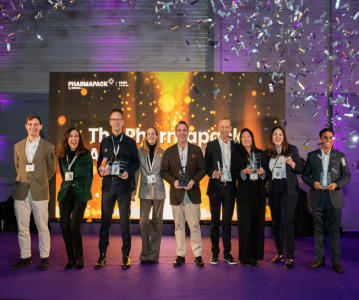
News Where Pharma Innovation Takes the Spotlight: Pharmapack Awards 2026
The 2026 Pharmapack Awards, held January 21, 2026, celebrated and recognised leading companies in the pharmaceutical packaging sector paving the way for packaging and drug delivery excellence in the future.
-
News Pharmapack 2026 - From the Floor
Celebrating its 25th anniversary in the city where it all started, Pharmapack 2026 is back in Paris! From January 21-22, 2026, Paris Expo Porte de Versailles opens its doors again to the pharmaceutical packaging and drug delivery sectors, ready for 2 d... -
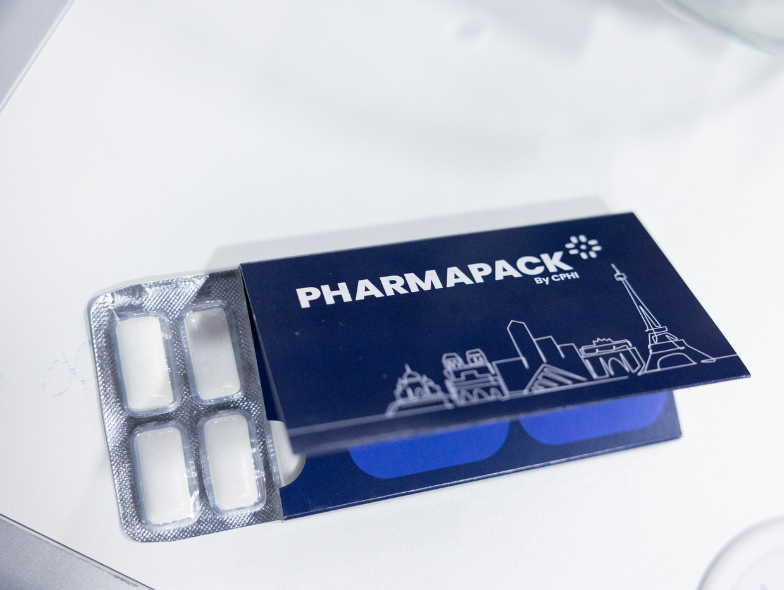
News Reshaping Pharmaceutical Packaging’s Sustainable Future at Pharmapack 2026
Pharmapack 2026 returns as the pharmaceutical packaging industry's premier gathering, bringing together global leaders, innovators, and decision-makers for an unparalleled showcase of cutting-edge solutions and strategic insights.
-
News CPHI Frankfurt 2025 – From the Floor
In a full-circle moment, our From the Floor blog returns to Frankfurt for the 2025 edition of CPHI Frankfurt. Taking place over 3 days from 28–30 October, we're excited to be back in a city of global innovation to meet, collaborate, and grow ... -
News Pharma in Focus: Key Findings from the CPHI community
Explore what the CPHI community has to say about the top trends emerging from the pharmaceutical industry and supply chain with our annual Strategic Insights infographic.